Lessons from Contemporary Conflicts for Syrian Justice, Gaza, Ukraine, Lebanon and Sudan
Syria today lives in the grip of a painful contradiction. As the country tries to recover, the promise of restoring the rule of law remains a distant horizon, an immense undertaking that extends beyond the alleys of Damascus, the bombed-out districts of Aleppo, or the hills of Sweida. This search for justice does not unfold in isolation. It is rooted in a global landscape where the echoes of other tragedies resonate: Gaza, Ukraine, Lebanon and Sudan. Everywhere, the same harrowing questions return: how to punish the perpetrators? How to honour the memory of the victims? How to weave the fragile threads between transitional justice and international criminal justice?
In Gaza, the cameras never stop recording. Images of the conflict flood our screens, giving the crimes committed against civilians unprecedented visibility. This constant media exposure plays a crucial role: it forces the world to look, to bear witness, to express indignation. International pressure and the visibility of the crimes can accelerate investigations, but they require strong protection mechanisms for witnesses and institutional safeguards to prevent abuses. Since October 2023, the conflict has intensified, turning Gaza into a tragic laboratory of real-time documentation. Despite the closed borders and omnipresent dangers, human rights organisations continue their painstaking work: recording the bombardment of civilian areas, documenting the destruction of hospitals and schools, and tracking the mass displacement of populations. Under the leadership of Prosecutor Karim Khan, the ICC has expanded its investigations, demonstrating that even in the heart of chaos, international justice can knock at the door. Yet this visibility contains its own traps. Reports from humanitarian organisations confirm it: too many images can drown out the message, creating a media saturation that numbs rather than mobilises. “Compassion fatigue” threatens the global public, overwhelmed by an unending flow of atrocities. Worse still, the extreme polarisation surrounding the Israeli-Palestinian conflict has turned the terrain into an ideological battleground. Accusations of bias, criminalisation of human rights defenders, journalists being targeted: the very credibility of documentation mechanisms is shaken. For Syria, the lesson is clear and bitter: visibility is not enough. It must rely on unshakeable protection structures, methodical and rigorous documentation that respects international standards. Without this, crimes risk being lost in the noise and fury of media cycles.
Ukraine tells a different story, that of a country documenting its wounds in real time, building the archives of its own tragedy even as missiles continue to fall. Since the Russian invasion of February 2022, the country has established a remarkable model of wartime justice. The Office of the Prosecutor General of Ukraine has recorded more than 130,000 suspected war-crime cases in three years. A staggering figure that testifies to fierce determination. Mobile investigation teams travel across the country, trained by international experts. As soon as an area is secured, they arrive: photographing crime scenes, collecting still-fresh testimonies, preserving material and digital evidence before it disappears. In The Hague, the Centre for the Prosecution of the Crime of Aggression [82], created in July 2023 with the support of the European Union, coordinates this international judicial effort. In March 2023, the ICC took a historic step: an arrest warrant against Vladimir Putin himself and Maria Lvova-Belova for the unlawful transfer of Ukrainian children [83]. An indictment that resounded like a thunderclap in the history of international justice. Technology amplifies this unprecedented mobilisation. Mobile apps allow civilians to report crimes in real time. Blockchain systems [84] guarantee the authenticity of digital evidence. Organisations such as Bellingcat [85] analyse satellite imagery, examine open-source videos, and reconstruct chains of command. As Fatou Bensouda, former ICC Prosecutor, has often emphasised, proactive documentation of crimes and international cooperation are essential to prepare the ground for prosecutions, even when investigations must take place during an ongoing conflict, with all the security constraints that entails [86]. Ukraine has also built a transnational judicial network: several European countries, including Poland, Lithuania and Germany, have opened their own investigations, creating a coordinated web of jurisdictions that makes impunity more difficult. Faced with such examples, Syria recognises the scale of what it lacks. Between 2011 and 2025, the absence of systematic and robust documentation created gaping holes in collective memory. Crimes erased, testimonies lost, evidence vanished. These gaps now delay trials, weaken prosecutions, and leave victims in an intolerable judicial limbo.
Lebanon is going through an exceptionally heavy period, shaped by the intersection of conflicts around Israel and its own internal dynamics. The image of an immobilised state emerges, trapped in fragile political balances that limit its capacity to meet the needs of its population. This paralysis feeds a troubling opacity and opens the door to foreign interference, adding layers of complexity to an already precarious reality. At the regional level, tensions with Israel are not limited to a traditional military confrontation: they take the form of pressure, daily strikes and unlawful actions that seek to shape the security environment without a unified state able to articulate a clear response. Between 27 November 2024 and 30 October 2025, Israel carried out 5,109 violations of the ceasefire agreement with Lebanon, killing 302 people and injuring 588. Recently, UNIFIL [87], the United Nations Interim Force in Lebanon, accused the Israeli army of firing on some of its personnel. Israel built a concrete wall making more than 4,000 square metres of Lebanese territory inaccessible, a structure that crosses the Blue Line [88], constituting a violation of Security Council Resolution 1701 as confirmed by UNIFIL, not to mention the numerous attacks on civilian and medical structures between September 2024 and the present. The security landscape is fragmenting: militias such as Hezbollah, Amal, the Druze PSP (Progressive Socialist Party) groups or the Lebanese Forces, sometimes deeply embedded in local power networks, exert disproportionate influence on political and military dynamics. This reality makes prospects for transitional justice and international criminal accountability more uncertain, as state and non-state actors interfere in judicial mechanisms and international norms, often without clear accountability. Foreign interference worsens Lebanon’s internal dilemmas. Regional and international actors, pursuing security, economic or ideological interests, intervene through diplomatic and media channels. This external presence disrupts reform and reconstruction efforts while deepening communal divides and stabilising political calculations that favour the status quo. The result is a political landscape where reform promises remain suspended and justice mechanisms face constraints tied to sovereignty, security and volatility. Added to this is the confessional question, which remains at the heart of Lebanese dynamics. The political system, deeply rooted in sectarian power-sharing, experiences growing tensions between groups that feel marginalised or excluded from decision-making. This dynamic fuels cycles of instability that undermine the protection of civilians, equitable access to justice, and fundamental human rights. Militias — whether structured or operating outside the state — intensify these tensions by creating parallel spheres of influence and blurring responsibility and legal authority. Documenting and redressing harm in a context where armed actors assume both security and political roles presents significant operational and ethical challenges while requiring respect for national sovereignty and international rules. The economic crisis and the question of Hezbollah’s disarmament [89], which calls into question traditional balances and creates major tension between security, sovereignty and power structures, have become new and acute internal pressures. Currency depreciation, price inflation and shortages strike the population hard, deepening inequalities and weakening the social fabric. This fragility influences all dynamics and can fuel memory politics and judicial processes for political ends.
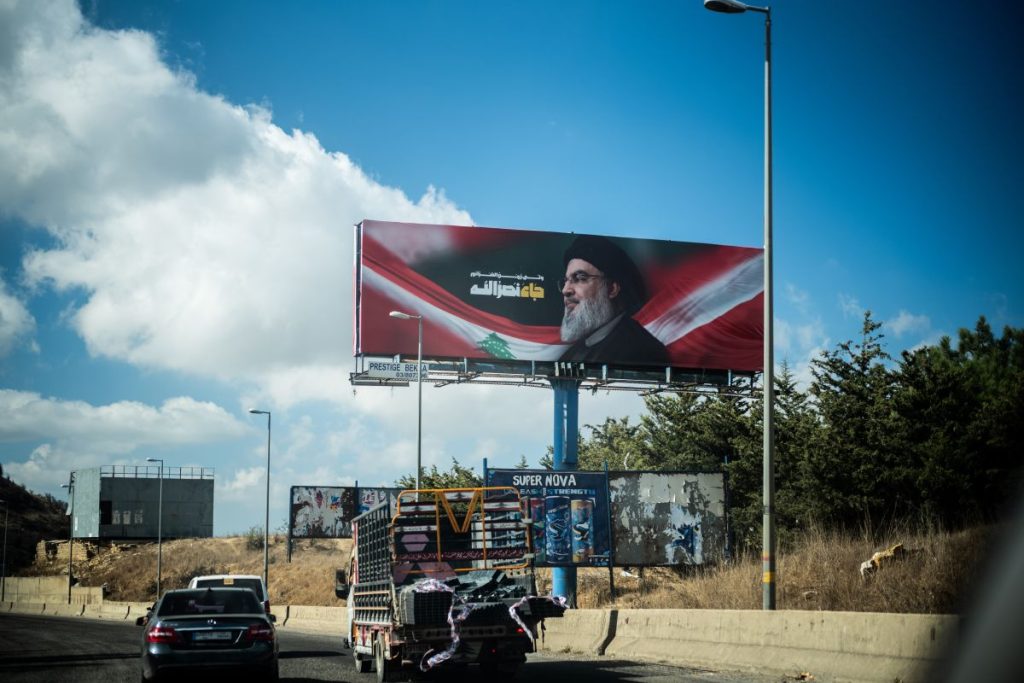
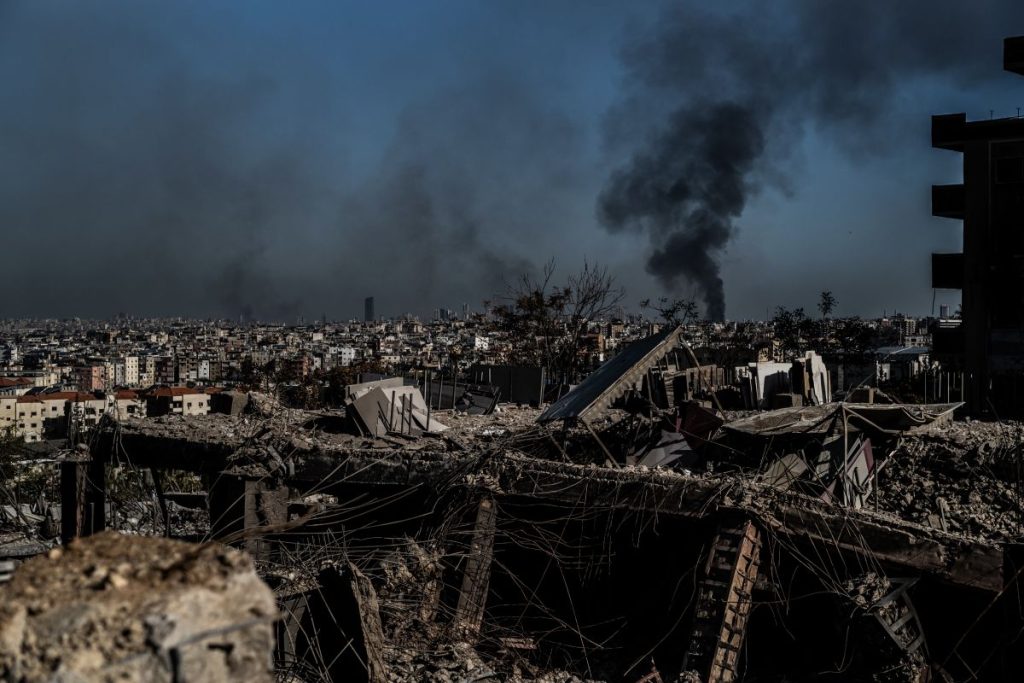
In the aftermath of 7 October 2023, Israel and Hezbollah engaged in near-daily clashes, plunging the southern border into a cycle of destructive bombardments. In September 2024, the escalation became brutal: Israeli strikes of unprecedented scale devastated Beirut, the Bekaa, and the South of the country, triggering a mass exodus. On 27 November 2024, a ceasefire was reached, yet UNIFIL confirmed more than 10,000 violations committed by Israel and 127 civilians killed. Photo 1: Portrait of Nasrallah in Ghobeiri, Beirut, Lebanon. 20 October 2024. Photo 2: Seventeen raids using white phosphorus, prohibited under international law, were carried out in central and southern Beirut. Hadath, Beirut, Lebanon. 3 October 2024. © Audrey M-G., SpectoMédia.
Sudan has plunged back into the abyss. An infernal cycle of violence, mass crimes, systematic rape and forced displacement is unfolding before the eyes of an international community that appears paralyzed, reduced to silence or helplessness. Since April 2023, when the Sudanese Armed Forces, SAF, [90] and the Rapid Support Forces, RSF, [91] clashed, the country has become the scene of a humanitarian catastrophe of devastating proportions. More than 10 million people have been uprooted from their homes, making Sudan the largest displacement crisis in the world. Tens of thousands of civilians have been massacred in intercommunal violence of unspeakable brutality. This explosive reality is not only a humanitarian tragedy, it demonstrates with stark gravity why immediate judicial memory and the continuum between transitional justice and international criminal justice are not distant ideals but vital urgencies. In Darfur, a cursed region that already knows the bitter taste of genocide, history repeats itself like a curse. The documented violations recall those that led the ICC to issue arrest warrants against former president Omar al Bashir in 2009 and 2010. The RSF, direct heirs of the janjawid militias [92] that orchestrated the genocide of the 2000s, are today perpetrating targeted ethnic massacres. In El Geneina and other towns in West Darfur, Masalit communities are systematically hunted, executed, erased. The United Nations Integrated Transition Assistance Mission in Sudan, UNITAMS, [93] was forced to suspend its operations, leaving a terrifying vacuum in documentation and civilian protection. But in this international vacuum, anonymous heroes persist. Local human rights defenders, resistance committees, and Sudanese civil society organizations continue, at the risk of their lives, to document the crimes. The Sudan Human Rights Hub, the Darfur Network for Human Rights [94], these names resonate as acts of resistance. Often working clandestinely to escape reprisals, these activists have compiled thousands of testimonies and photographic evidence that defy oblivion.
Sexual violence has become a systematic weapon of war. Gang rapes, abductions, sexual slavery, the testimonies are unbearable. The United Nations Human Rights Office has described these acts as possible crimes against humanity, calling for independent international investigations. But humanitarian access remains locked down, and international mechanisms are agonizing in a context where the parties to the conflict deliberately disregard international humanitarian law. The Sudanese case also reveals the deadly dangers of preventive inaction. Despite repeated warnings from experts, despite alarm signals flashing in red, the international community failed to mobilize the resources needed to prevent the conflagration. And now it watches, powerless, as flames consume the country. The African Union, through its Peace and Security Council, attempted mediation between the belligerents. In vain. Faced with the intransigence of military commanders, its efforts broke like waves against a rock. The African Court on Human and Peoples’ Rights could play a complementary role to the ICC, but it remains hampered by constraints of resources and jurisdiction. The ICC prosecutor, Karim Khan, made a visit to Sudan in January 2024, reaffirming that the Court maintained its jurisdiction over Darfur. But without cooperation from the de facto authorities, and facing considerable logistical obstacles, the Court’s capacity to conduct effective investigations remains severely limited. Sudan teaches a brutal lesson, regional frameworks and international partnerships are indispensable to support investigations, preserve evidence and uphold the memory of victims beyond political fluctuations. It also shows that impunity breeds impunity, that without rapid and visible justice, cycles of violence perpetuate and intensify, feeding on their own horror.
The example of these four contemporary crises converges to offer Syria crucial lessons, engraved in the blood and tears of other peoples. From Gaza, Syria must retain the importance of international visibility while being wary of its insidious traps. Documentation must be rigorous, shielded against political instrumentalization, protected from media saturation that numbs consciences. From Ukraine, it can draw inspiration from this remarkable ability to document in real time, to weave networks of international cooperation, to use technology to capture truth before it evaporates. The Ukrainian example proves that justice can be prepared even under the bombs. From Lebanon, Syria can draw these lessons, in a fragmented country with limited judicial space, modular and local transitional justice mechanisms and international criminal justice processes are needed to strengthen the credibility of investigations and support local efforts. On the ethical path, history reminds us that justice must not be instrumentalized, just as one must avoid using a narrative to serve causes that trample human dignity. Transparent and inclusive governance must also be built, so that justice does not become a political instrument nor a key to manipulate identities and memories. From Sudan, it must draw the tragic lesson that impunity is a spreading poison, without rapid and visible justice, cycles of violence never stop, they metastasize. For Syria knows this impotence all too well. As early as 2011, it had become a poignant example of the international community’s failure in the face of mass crimes, even when widely documented. Within the United Nations Security Council, 16 resolutions related to the Syrian conflict were blocked between 2011 and 2023 by the double Russian and Chinese veto. Among these aborted texts were several that aimed to entrust the ICC with the task of investigating crimes committed by all factions. This systematic blocking is not just a diplomatic symbol, it has concrete, deadly consequences. For observers like Iyad Al Shaarani, “each Russian or Chinese veto amounted to an implicit authorization for the Syrian regime to continue its abuses. ” International law existed, certainly, but it remained an empty promise, an unusable legal mirage.
Thus, all these examples converge towards an evidence that can no longer be ignored, transitional justice cannot wait. It cannot patiently sit until hostilities cease or until the country is perfectly stabilized. It must begin immediately, with the available means, relying on existing documentation networks, strengthening witness protection, establishing strategic partnerships with national and international jurisdictions ready to take action. The window of opportunity to preserve evidence and collective memory is not infinite. It closes a little more each day. Each passing day sees witnesses disappear, material evidence fade, international political will weaken. The clock is ticking, relentlessly, and Syria must understand that justice will not come by itself. It must be built, documented, torn from oblivion, now, before it is too late.
International positioning :
Since the fall of the Syrian regime, the country has remained at the forefront of international relations. One could almost follow its pulse, as if each movement on the global stage now depended on what becomes of justice, truth and reconciliation. Around this quest, actors deploy themselves in two major directions that carve a path sometimes difficult to read, on one side, plural impulses in the name of transitional justice, on the other, geopolitical calculations that hinder progress.
From the early days when the ruins of the regime stopped speaking to make room for fragile promises, the international community reacted with an urgency that resembled a collective call for help. The European Union spoke out clearly, voicing its commitment to mechanisms that document the crimes of the conflict and that may lay the foundations of a possible peace. In March 2025, Kaja Kallas, then High Representative of the European Union, EU, for Foreign Affairs, recalled a persistent truth, peace in Syria cannot exist without an honest confrontation with the atrocities of the past. Her speech carried a concrete promise, to support victims and foster truth and justice initiatives. To give substance to this promise, the EU announced 300 million euros over three years dedicated to transitional justice in Syria, with specific projects, a field office of the Office of the High Commissioner for Human Rights in Damascus and support for Syrian human rights organizations. In parallel, the United Nations strengthened its presence and instruments. As early as January 2025, the Independent International Commission of Inquiry [95] on Syria went into the field to collect testimonies and document what is happening in prisons and detention centers. The High Commissioner for Human Rights, Volker Türk, repeatedly emphasized the urgency of addressing serious crimes. He stated that “transitional justice is crucial as Syria moves forward ” and that no lasting reconciliation is possible without truth or accountability [96]. In February, he travelled to Syria and advocated for the creation of an international hybrid judicial mechanism specifically for Syria. But the framework of action remained fragile. The Security Council, paralyzed by repeated vetoes, hindered any binding resolution. Between 2011 and 2022, Russia cast seventeen vetoes on a draft resolution aimed at strengthening an international justice mechanism for Syria, arguing that it constituted interference in the affairs of a sovereign State. [97]
Behind the scenes of these grand speeches lies a more intimate and complex reality, responsibility. Some countries venture onto bold paths. France marked a symbolic judicial milestone by targeting Bashar al Assad, now exiled in Moscow, with a series of international arrest warrants, after the annulment, on 25 July 2025, of an initial warrant issued in November 2023, investigating judges issued a new warrant on 29 July 2025, then a third on 23 October 2025 for the 2013 chemical attacks [98] that devastated Adra, Douma and the Ghouta, causing hundreds of injuries and more than a thousand deaths. The former dictator was already being prosecuted for two other crimes, the bombing of civilian homes in Deraa in 2017, covered by a warrant of 20 January 2025, and the attack on the Homs press center in 2012, at the origin of a warrant dated 19 August 2025, which killed Marie Colvin and Rémi Ochlik. [99]. Iyad Al Shaarani describes this approach as unprecedented, “it is the first time that a recently deposed head of State is explicitly targeted by a European country. It is a strong message, stating that impunity is no longer a tolerable norm. ” Other European States proceed as well, though to varying degrees. In Germany, the federal prosecutor obtained, on 27 May 2025, the execution of an arrest warrant against Fahad A., a member of Branch 251, also called al Khatib Branch, of the Syrian regime, charged with torture and crimes against humanity. In the Netherlands, several procedures target suspects involved in crimes committed in Syria, particularly members of armed groups or pro regime militias present on Dutch territory. Yet the unity of international actors remains fragile and difficult to forge.
The United States, true to their usual caution, support some Syrian NGOs and fund documentation mechanisms, while weighing their words to avoid exacerbating an already fractured region. Turkey, militarily present in the north, remains reluctant, it accepts the fall of a regime its rebel allies had opposed, but it would resist any initiative that could scrutinize its own actions or those of its partners. Tensions rose in May 2025 when human rights organizations demanded that crimes by all actors, including those backed by Turkey, be included in the process. Russia, which granted asylum to Assad, had fiercely defended the legitimacy of the regime while blocking binding resolutions at the Security Council. Its choice to protect its former ally has become an embarrassment for the Kremlin, which simultaneously faces increasing international pressure and demonstrations by Syrians from the diaspora outside Russian embassies. A decisive question remains, how to deal with members of the former security and administrative apparatus ? How to combine fair trials, genuine investigations and possible reintegration ? Since the regime’s fall, the new Syrian authorities have announced the arrest of former members of the security services and officers from the Assad era. Among the most cited figures are former air force officer Saleh al Abdullah, Nariman Mustafa Hijazi, known as “the butcher of Daraya ”, and Daas Hassan Ali, former State Security chief in Deir ez Zor. The highly publicized arrest of Wassim al Assad [100], along with the detention of former agents in Hama and Homs, illustrates this willingness to target perpetrators of repression, including militiamen linked to the Houla massacre, 2012, [101], attributed by the UN to pro regime forces and the shabiha [102]. In parallel, the major trial of 18 November 2025 on the Alawite coastal massacres brings together 14 defendants among 563 suspects, without a specific subset of former regime agents being isolated. Although no official data classifies these profiles, reports from the Syrian Network for Human Rights, SNHR, document 658 arbitrary arrests in the first half of 2025 and 197 additional cases in October, signaling increased judicial pressure on former pillars of the repressive apparatus [103]. But detention conditions and judicial guarantees remain unclear, fueling concerns among human rights defenders. Many call for avoiding mistakes made in Iraq after 2003, the brutal dissolution of the State apparatus and massive purges that fueled the insurgency. The idea of a measured and transparent “lustration” process emerges as a possible path, excluding those responsible for serious crimes while preserving the expertise needed for the functioning of the State [104].
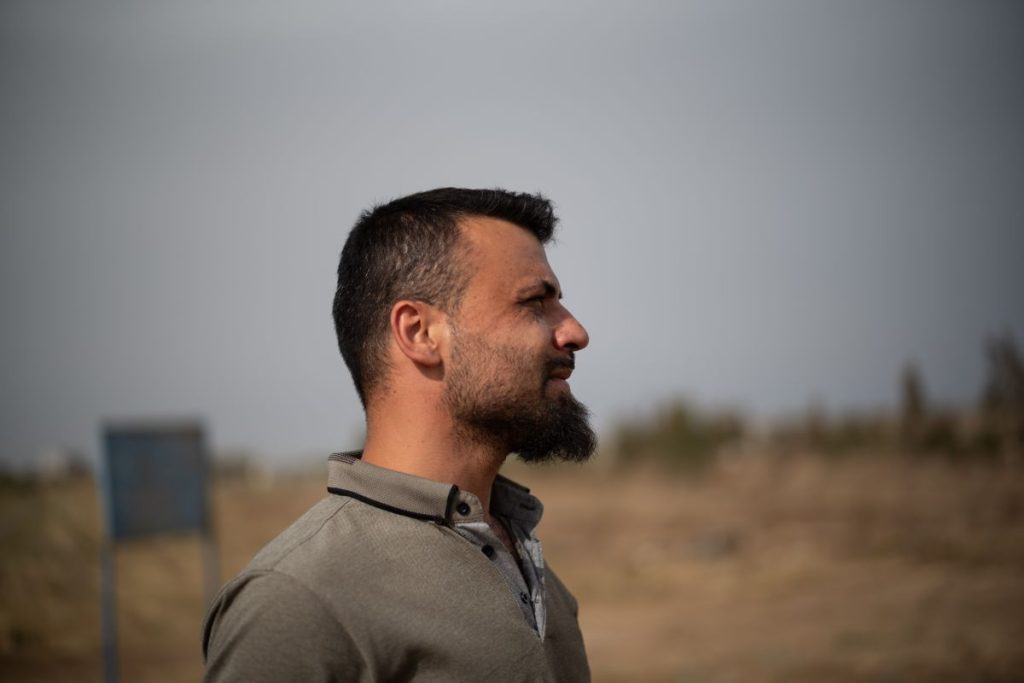
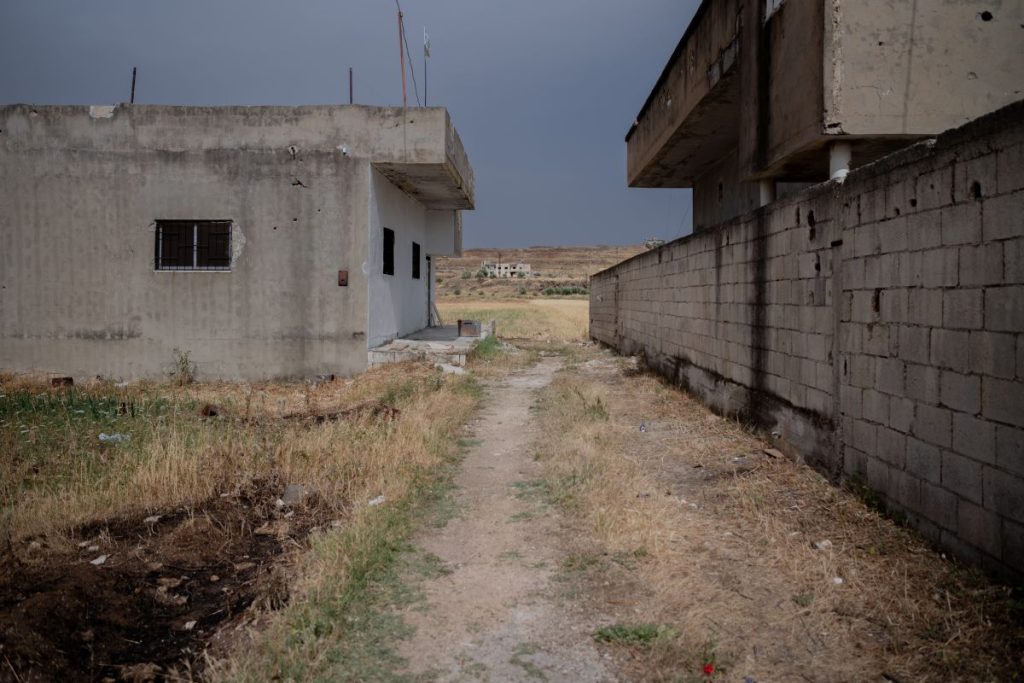

Mohamed al Sayed (photo 1) is the only survivor, together with his younger brother Ali (photo 3, screenshot Al Jazeera, report Survivor describes Syria’s Houla massacre, 1 June 2012), who was 11 years old at the time of the events, of the al Houla massacre. Their entire family was brutally murdered by the regime on 25 May 2012 in their home (photo 2). Regime forces, the Shabiha and pro government Russian militias killed 108 civilians, including 49 children. The inaction of the international community and of the United Nations troops sent to the area sadly recalls the Rwandan genocide. Today, beyond recognition, Mohamed and Ali want justice to be done and to rebuild their future. Al Taldo, Homs, Syria. 18 May 2025. © Audrey M G, SpectoMédia.
At Geneva, UN experts recall an essential truth, it would be unrealistic to leave Syria alone with the heavy task of delivering justice after a decade of widespread violence. Nousha Kabawat [105], from ICTJ, stresses that despite the resilience of Syrians who document atrocities and preserve memory, their struggle risks remaining a dead letter without determined international support. A report published in 2025 by ICTJ, based on a series of community dialogues in Syria, highlights several urgent needs, strengthening the capacities of judicial institutions and justice professionals, developing means to search for and identify the disappeared, and integrating psychosocial support for victims at the heart of future transitional justice mechanisms [106]. This support is not limited to robust judicial guarantees, it also requires substantial financial backing and constant diplomatic pressure on the parties involved. This momentum is part of a broader framework. On 17 March 2025, at the donors’ conference in Brussels, the international community announced 5.8 billion euros to support Syria in its reconstruction. Beyond the amount, donors insisted on the need to support a genuine political transition, to relaunch collapsed institutions and to re establish minimum governance in a devastated country. According to Reuters, donors now place questions of justice, accountability and support for the transition at the forefront, considering that no sustainable reconstruction is possible without strong judicial institutions. International aid nevertheless remains tied to guarantees regarding human rights and political inclusiveness, a conditionality that fuels tensions with the new Syrian authorities, keen to assert their sovereignty [107]. Comparative studies on the cost of international and hybrid criminal tribunals, Yugoslavia, Rwanda, Sierra Leone, Lebanon, Cambodia, estimate that a specialized jurisdiction for Syria would require several hundred million dollars over around ten years, depending on its mandate, its seat and the number of cases handled [108].
The deployment of international expert teams accelerated at the beginning of 2025. In the mass graves discovered around Damascus, Argentine forensic doctors, drawing on decades of work reconstructing the fates of the disappeared under dictatorships in their own countries, are working hand in hand with their Syrian counterparts. Alongside them, Bosnian judges, accustomed to listening to the whispers of villages and handling mass crime cases, come to share their techniques and investigative methods. This South South cooperation, encouraged by the United Nations, carries with it a promise of experience sharing, a precious trust that countries with similar trajectories can pass on to one another. Yet alarm bells regularly ring among experts. Syria cannot become a disastrous precedent where inaction or collective insufficiency would send a dangerous message to authoritarian regimes. On 7 May 2025, SNHR stated in a report that Syria has only “an extremely narrow historical window” to build credible transitional justice, warning that this crucial moment “does not tolerate any delay”. This diagnosis is echoed the same year by HRW, the UN and several Syrian organizations, which describe the post Assad period as a “historic opportunity” to establish truth and accountability, but warn that it could “close quickly” if international commitments do not translate into effective justice mechanisms. The risk, they warn, is that inaction will normalize impunity for war crimes and crimes against humanity. Noura Ghazi expresses deep frustration, “For there to be accountability, there needs to be an authority ready and qualified to carry it out, yet that is not the case. Nothing that is happening today meets international standards of transitional justice. ” She denounces the absence of adequate mechanisms, “There is no law criminalizing war crimes and crimes against humanity in Syria, no specialized court, no competent judges. The entire process is flawed. ” Despite these obstacles, she insists on the urgency to act, “Even if one day an accountability mechanism were to be established, it would take time. But in the meantime, the immediate needs of victims must not be forgotten. ” Faced with these risks, experts argue for a multi level system, weaving together complementary mechanisms adapted to the Syrian reality. Many mention the idea of a special hybrid tribunal for Syria, bringing together international and Syrian judges, capable of focusing on the gravest crimes and the highest ranking perpetrators, in the spirit of hybrid tribunals that have marked other transitions. In parallel, specialized chambers could exist within the Syrian system, dealing with cases of mid level officials while benefiting from international guidance and support. Foreign experiences offer insight into the immense challenges that await Syria. In Cambodia, the Khmer Rouge Tribunal [109] came into being after years of effort and sustained international pressure. In Sierra Leone, it was cooperation between the UN and the local state that made it possible to bring those responsible to justice. Germany and France propose sending experienced magistrates, drawing on the model of judicial assistance seen in Kosovo after 1999 [110].
The consequences of these crimes extend far beyond the legal framework. Massive destruction, forced displacement of millions of people, disappearances and the systematic use of torture have left scars that will not heal easily. More than 6 million refugees abroad, 7 million internally displaced persons, 300,000 disappeared, and hundreds of thousands of survivors suffering from deep psychological trauma. Many know that no sentence will ever be enough to repair their pain. Yet one aspiration persists, reparations that are not limited to figures, but that reaffirm the dignity of victims and rebuild collective memory. Iyad Al Shaarani reminds us with gravity, “Transitional justice is not only about judging the perpetrators. It is also about caring for the victims. ” For many, the true goal is the public recognition of every personal tragedy and the integration of these stories into the national narrative that must emerge from reconciliation. Around the world, experiences of reparation illuminate this path. In Argentina, after the dictatorship, families of the disappeared recovered a measure of truth and dignity through the opening of archives and financial compensation. In Morocco, the Equity and Reconciliation Commission [111] combined compensation with public hearings that broke through tenacious silences. In Rwanda, symbolic reparations, commemorations, monuments, restitution of land, accompany trials so that survivors can regain their footing in a public memory. In Syria, local initiatives are multiplying as well, Families for Freedom is campaigning for a national reparations fund fed by assets confiscated from relatives of the regime. In March 2025, the new Syrian authorities announced the freezing of the assets of 250 figures linked to the former regime, estimated at several billions of dollars. This financial avenue could support a reparations program and help restore shattered lives.
Attention is also turning to witnesses and victims, who demand that justice be not just a word but a living practice. Pablo de Greiff reminds us, “Criminal prosecutions, although essential to establish individual responsibility, are not sufficient on their own. Reparations play a unique role, they acknowledge suffering, restore civic trust and help rebuild the bonds of solidarity essential to repairing the social fabric. ” [112] In this context, Syrian justice is not an isolated matter, it also plays out on regional and international stages. Iran, once a pillar of support for the regime, now sees its influence wane with the fall of power and fears that revelations of crimes could be used to demand accountability. On the other hand, encouraging signals are coming from the region, the United Arab Emirates and Saudi Arabia announced, in March 2025, reconstruction aid programs conditioned on respect for human rights and progress in the transitional justice process. In Jordan, Lina Haddad emphasizes that Syrian justice cannot be understood without taking into account refugees, borders and the dynamics of armed groups that go far beyond the national framework [113]. Iraq, which shares a long border, is also closely monitoring developments, fearing a resurgence of cross border threats and seeking to strengthen security and judicial cooperation.
The question of Syrian sovereignty remains at the heart of the discussions. In 2025, many Syrian and international actors recall that transitional justice must be led by Syrians. HRW thus refers to a “strong preference for Syrian led processes”, and a statement from Syrian NGOs, STJ, calls for mechanisms of truth and equity “truly led by Syrians”. ICTJ underlines the same requirement, the international community can support but must not lead. In this spirit, in April 2025, the Syrian authorities rejected certain UN proposals deemed too intrusive, reaffirming that justice must remain in Syrian hands [114]. Finding the delicate balance between sovereignty and international support will be decisive for the effectiveness of the process. In sum, this chapter of transitional justice is not just a set of technical mechanisms. It is a collective quest to preserve the memory of victims, ensure dignified reparations and lay the foundations for lasting reconciliation. It is also an invitation to action, that commitments be translated into deeds, that regional and international cooperation fit into a dynamic of robust and measured support, without imposing but by assisting. And above all, that the smiles of survivors and the voices of families may gradually find their place in the official narrative that will give Syria the means to rebuild itself on foundations of justice, dignity and hope.
The legitimacy of the new authorities remains fragile in several corners of Syrian territory. In the Kurdish areas of the northeast, the Autonomous Administration of North and East Syria, AANES, [115] has forged its own trajectory and is demanding its own path toward transitional justice. In February 2025, the Kurdish authorities announced the creation of a truth and reconciliation commission, an initiative that nourishes both hope and concern, the fear of a process that might fragment, at the risk of letting the most vulnerable voices and experiences slip into the shadows of a partial system. The international community thus faces a delicate dilemma, supporting a unified approach while respecting the specificities and legitimate grievances of each component of Syrian society. Alongside these internal dynamics, other areas remain under the grip of various armed groups. In the northwest, certain rebel factions still control parts of the territory and refuse to recognize the legitimacy of the central government. How can a truly inclusive transitional justice be built when the country remains carved into pockets of power where some refuse to lay down their arms or join the political process ? This question, still unresolved, represents a major obstacle to the emergence of a genuine national justice framework.
Another dimension fuels heated debates, the very scope of the process. Should it target only the crimes of the Assad regime or also include those committed by opposition groups, Kurdish militias, foreign powers and jihadist groups ? The credibility of the project will largely depend on its ability to prosecute all perpetrators of serious crimes, without privileges for any side, without exception.
In addition, sexual violence and gender based crimes occupy a crucial yet often neglected place. Thousands of women and girls have suffered rape, sexual slavery and other abuses, feeding a collective memory that cannot be healed without recognition or justice. Gender based violence remains one of the most silenced realities of the Syrian conflict. For years, organizations such as UNFPA, UNICEF, UNHCR, SNHR and STJ have been describing a phenomenon that is massive, daily, yet almost invisible, as shame, stigma and fear of reprisals prevent survivors from speaking out. In camps, bombed areas, on exile routes or in detention centers, women and girls are subjected to sexual violence, forced marriages or assaults linked to displacement. Mayada, a former detainee met in Darayya, recounts that after nine months of detention in inhuman conditions, upon her release, her home had been seized by members of Lebanese Hezbollah and she was unable to file a complaint “for fear of reprisals and of being sent back to detention” as well as “so that shame would not fall on the family”. Humanitarian agencies point out that only a tiny fraction of survivors seek help, due to the lack of security and specialized services. This systemic under reporting makes gender based violence a central challenge for Syrian justice, one cannot repair what has never been named, and survivors risk being left on the sidelines of mechanisms of truth, reparation and justice if suitable protections are not put in place [116]. Witness and survivor protection lies at the heart of these issues, how can their safety be guaranteed when the structures of the former security apparatus have been dismantled but armed actors remain active and influential ? In April 2025, several cases of intimidation and threats against potential witnesses were reported, raising serious concerns about the capacity of the new authorities to protect them. In an article in L’Orient Le Jour published on 26 November 2025, journalist Amélie Zaccour [117] recounts the ordeal endured by five victims from the Alawite minority. Post Assad Syria is still marked by episodes of violence. Cases of abduction and sexual violence targeting minorities increased sharply in the weeks following the massacres on the Syrian coast. In several reported cases, the new authorities failed to protect women, security forces allegedly intimidated survivors, questioned their testimonies and downplayed the facts, despite alerts from Amnesty International and the UN. The Interior Ministry denies the scale of the disappearances, which feeds a sense of abandonment and impunity. In this context of institutional denial and stigma, survivors struggle to rebuild their lives, often without support and in a country where no real protection is guaranteed to them. Witness protection programmes should take shape with international support, drawing on lessons learned from the Balkans and Rwanda, physical security, psychological support, confidentiality of testimonies, and sometimes relocation of witnesses and their families. Nothing is simple or linear, the logistical and financial cost of such a system is considerable for a country with limited resources like Syria.
Some survivors and victims also express frustration at what they perceive as an excessive focus on the crimes of the regime. In May 2025, victims of the Islamic State in the eastern provinces demanded that justice also be rendered for the massacres, beheadings and enslavement perpetrated by Daesh. Likewise, civilian families affected by bombardments by international coalitions request that these episodes be subject to impartial investigations. This tension is a reminder that transitional justice cannot be reduced to a single narrative, it must listen to all suffering, all voices that have been wounded, in order to move toward reconciliation that leaves no one behind.
Beyond individual cases and territorial claims, a shifting reality emerges, including marginalized voices, ensuring the safety of witnesses, access to dignified reparations, and the need to build mechanisms that withstand the country’s fragmentation. The road ahead remains long and uncertain, but this collective narrative advances with the conviction that every voice that speaks, every complaint that can finally be voiced, can nourish a justice capable of reconnecting the thread of human dignity.
Syria at a crossroads.
Syria moves painfully toward dawn, after a long ordeal marked by fifty years of dictatorship and nearly fifteen years of conflict. This path has left deep wounds : crimes against humanity, mass displacement, and the destruction of the social fabric that will take generations to heal. In this context, transitional justice is neither an abstract concept nor a superfluous luxury ; it is a vital necessity to ensure the reconstruction of a brutally fractured society and to reclaim the future. As Iyad Al-Shaarani has reminded us, “ without truth, there is no future ”. Recognizing these crimes is not only a moral debt owed to the victims and their families, but also a fundamental political act to build a state based on law rather than fear.
Noura Ghazi carries this conviction at the most personal level. For her, the absolute priority is repair and the restoration of peace : “ For me, transitional justice only makes sense if it leads to genuine appeasement. Everything else, courts, procedures, are only means to reach that peace. ” She insists on the importance of recognition as the first step : “ Not only as a lawyer, but as someone directly affected, I can say that the first step is recognition. I announced last week that I had finally obtained official information about the execution of my husband. For me, it starts there : that those responsible and the authorities in place acknowledge the crimes committed. Hundreds of thousands of people have been affected, and as long as this is not recognized, nothing can truly begin. ”
Recent history reminds us that choices between justice and amnesty carry lasting consequences. Nuremberg, Kigali, Buenos Aires, or Sarajevo show that abandoning justice opens fractures that are difficult to heal. Lebanon stands as a painful example : the absence of justice after the civil war locked the country into a confessional straitjacket incapable of reform. Syria cannot follow this desiccating path. Today, even without a dedicated international tribunal, progress exists : trials are opening in Europe, arrest warrants target Syrian officials, including Bashar al-Assad. The testimonies of NGOs, families, and activists form a living memory that refuses oblivion. In this movement, victims, families of the disappeared, lawyers such as Al-Shaarani, and human rights organizations represent the pillars of transitional justice ; their voices are crucial and cannot be silenced.
To avoid falling back into cycles of violence, institutions must be rethought, judicial independence guaranteed, and all components of society included in the reconstruction process. Without these reforms, peace would be nothing more than a fragile lull. As Professor Antonio Cassese, a pioneer of international justice, consistently argued, the fight against impunity is not one political option among others : it is indispensable to restore the dignity of victims and prevent the repetition of mass atrocities [117]. For his part, Pablo de Greiff reminds us that transitional justice is not oriented solely toward the past : it is a policy for the future, designed to transform the structural causes of violence and prevent society from reliving the same horrors [118].
Questioning reconciliation therefore means confronting difficult choices : acknowledging what happened, naming those responsible, sometimes even symbolically, and affirming that this is neither vengeance nor oblivion, but an effort to understand, recognize, and repair. And this requires courage : “ Yes, but only if we choose courage. The courage to acknowledge our faults, our silences, our complicities. The courage to say : this happened, and never again. ”
Syria now stands at a crossroads. To forget or to remember, to tolerate impunity or to work for justice, to reproduce the horrors of the past or to rebuild the foundations of a state governed by the rule of law : its destiny will depend on these choices. The road will be harsh and strewn with obstacles, but it has already begun. Reconstruction will require far more than material rebuilding : it will demand sincere recognition of the crimes committed, tribute to the memory of the victims, and structural reform of the judicial system. Without this, the country will remain trapped by its past nightmares ; with it, Syria could perhaps become an example for other regions afflicted by persistent conflicts, such as Gaza or Ukraine.
The historic window of opportunity opened by the fall of the regime in December 2024 must not close if the international community fails to overcome its divisions and if the new Syrian authorities do not demonstrate a sincere commitment to justice and human rights. Time works against justice : evidence can disappear, witnesses can die or lose their memories, perpetrators can flee or be killed before being judged. Action must be taken swiftly while observing international standards of fair trial, a delicate balance to achieve. The credibility of the process will depend on its ability to be inclusive, transparent, and impartial. If Syrians perceive transitional justice as an instrument of domination by one group over another, or as a façade meant to satisfy the international community without genuine commitment, the process will fail in its objectives of reconciliation and national reconstruction.
The first months of 2025 have shown encouraging signs : mobilization of civil society, financial and technical support from many countries, and the emergence of new institutions dedicated to transitional justice. But obstacles remain : geopolitical divisions, blockages within the UN Security Council, internal tensions between Syrian factions, and the sheer magnitude of the task all remind us that the road ahead will be long and arduous. The months and years to come will be decisive in determining whether international law can fulfill its promises to the Syrian people and whether transitional justice can heal the wounds of a deeply traumatized nation. As Iyad Al-Shaarani reminds us : “ We do not have the luxury of waiting. Every day that passes without justice is a day when impunity becomes normalized, when victims lose hope, and when the foundations of lasting peace erode. ”
Syria must become the moment when the international community proves that international law is not merely a beautiful theoretical idea, but a concrete commitment to all victims, everywhere in the world. Foreign courts, specialized NGOs, and multilateral institutions have engaged in crucial initiatives : evidence collection, support for victims, preparation of future trials aimed at establishing responsibility for the crimes committed. But this engagement must be sustained over the long term, beyond media cycles and political changes in donor countries. Transitional justice is not a sprint ; it is a marathon that will require patience, perseverance, and unwavering commitment to the principles of justice, truth, and human dignity. As Noura Ghazi emphasizes : “ Transitional justice is not an end. It is a path. What matters is to move forward, even slowly. Every testimony, every gesture, every act of solidarity is a stone on that path. ” Despite the wounds, she retains faith in the possibility of reconciliation grounded in truth : “ Our struggle is not only for Syrians, but for human dignity. Syria must choose courage, the courage to face its past, to honor its dead, to repair what can be repaired, and above all to build a future where human life has value. ” Through her calm and unwavering words, she reminds us that only this path may lead to genuine peace.
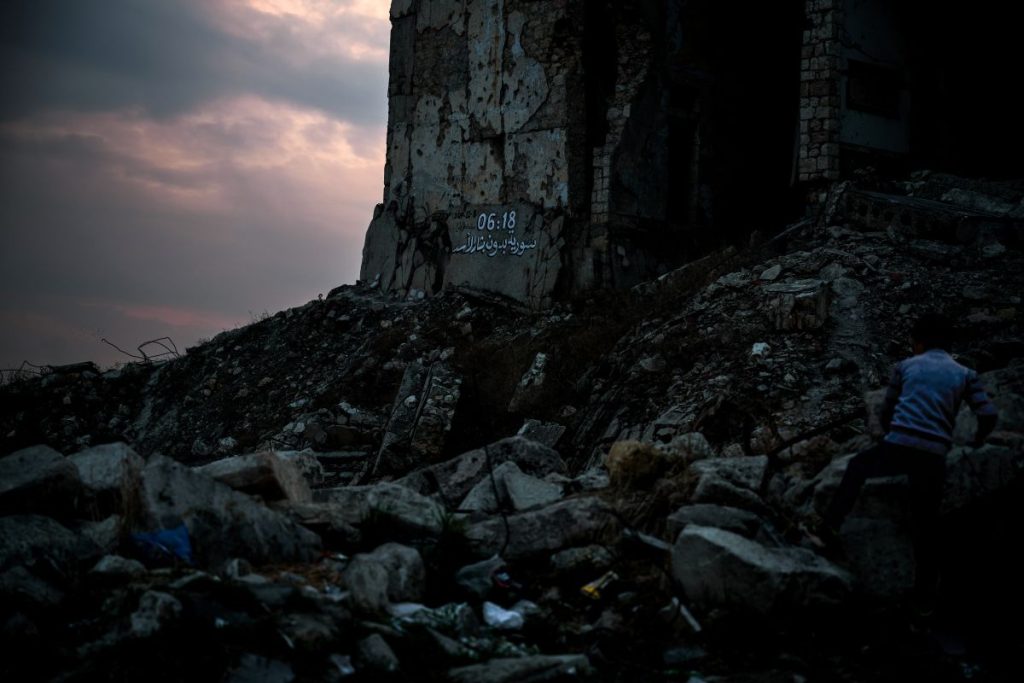
The first city liberated by HTS (Hay’at Tahrir al-Sham) on 29 November 2024, two days after the beginning of the offensive. In front of the Citadel of Aleppo, destroyed buildings recall the barbarity of the regime throughout all these years. An inscription pierces the darkness of these scars with a date and a time : 06 : 18, the hour at which the horror officially came to an end on 8 December 2024 : “ Syria without Bashar al-Assad ” at last. Aleppo, Aleppo, Syria. 1 February 2025.
NOTES :
This analysis grew out of long term work involving the collection of testimonies and extensive reading : more than thirty reports by the UN Commission of Inquiry, hundreds of studies published by international and Syrian organizations, academic articles on transitional justice, court decisions from around the world, and above all, testimonies from victims and survivors, gathered between December 2024 and November 2025, whose voices resonate on every page. Each source brought a different perspective. UN reports provided the rigor of documented facts. NGOs offered ground level insight and proximity to victims. Researchers contributed theoretical distance. Legal experts outlined the contours of what is possible. And human testimonies constantly reminded us that behind every figure lies a face, a story, a violated dignity.
The aim of this work is not to claim exhaustiveness, an impossible ambition given the scale of the Syrian tragedy, but rather to offer an analysis that is as comprehensive, balanced, and accessible as possible. A bridge between technical expertise and civic understanding, between international law and human reality.
This text will need to evolve over time, as the Syrian situation continues to change, and with it, the challenges and hopes of transitional justice.
Fixers :
Israa Alfrai, Majd al-Boukai, Ramez Daoud.
Translation :
Nawara El Zo, Adnan Farzat.
Special thanks :
to Iyad Al-Shaarani, Noura Ghazi, Amani Abboud, Um Mahmoud, Michel Ghaith, Khaldoun al-Mallah, Éléonore P., Nawara EZ., Ahmad K., Adnan F., Aïda F., and to all those met in the field who placed their trust in me by confiding in me and sharing their stories and aspirations.
Annexes :
[82]: Centre for the Prosecution of the Crime of Aggression: based in The Hague, this is an international structure tasked with supporting investigations and prosecutions related to the crime of aggression, one of the most serious crimes under international law, by providing legal expertise, coordination, and analysis to competent states and jurisdictions.
[83]: Maria Lvova-Belova is the Russian Commissioner for Children’s Rights, accused by the International Criminal Court of the deportation and illegal transfer of Ukrainian children to Russia during the war.
[84]: Blockchain is a technology for storing and transmitting information in the form of a decentralized and secure register, in which data are recorded in an immutable and verifiable manner without intermediaries.
[85]: Bellingcat is an open source investigation collective that uses public data, images, videos, social networks, and digital archives to document crimes, verify facts, and conduct independent investigations into conflicts, human rights violations, and disinformation.
[86]: UNITED NATIONS – German Review on the United Nations, vol. 62, no. 1, 2014.
“We must at all costs prevent the politicization of the ICC.” Interview with Fatou Bensouda, Chief Prosecutor of the International Criminal Court (ICC), and former Attorney General and Minister of Justice of the Republic of The Gambia, on the impact of the ICC, criticism from African states, the new investigation strategy, the importance of witness protection, cooperation with non States Parties, and the deterrent role of the Court.
https://dgvn.de/fileadmin/user_upload/DOKUMENTE/English_Documents/Interview_Fatou_Bensouda.pdf
[87]: United Nations Interim Force in Lebanon (UNIFIL): UN peacekeeping mission deployed in southern Lebanon to monitor the ceasefire, support the Lebanese Armed Forces, and contribute to stability along the border with Israel.
[88]: The Blue Line is the demarcation line drawn by the UN in 2000 to confirm Israel’s withdrawal from southern Lebanon. It is not an official border, but a technical line intended to reduce tensions and facilitate UNIFIL’s work.
[89]: UN Security Council Resolution 1701 (2006) is a UN decision that ended the war between Israel and Hezbollah, requiring a ceasefire, the deployment of the Lebanese Army in southern Lebanon, the strengthening of UNIFIL, and the cessation of hostilities and unauthorized arms trafficking.
[89]: The disarmament of Hezbollah refers to the national and international debate surrounding the removal of weapons from the Lebanese Shiite militia, the only armed faction that remained active after the end of the civil war. While all other militias were dissolved in 1990, Hezbollah retained its arsenal in the name of resistance against Israel. Since the ceasefire concluded in November 2024 between Lebanon and Israel, the Lebanese government has, for the first time publicly, taken concrete steps toward Hezbollah’s disarmament under international pressure, notably from the United States and Israel. The principle that only state forces may hold weapons is now officially stated as an objective, including an action plan entrusted to the Lebanese Armed Forces to centralize weapons control and gradually confine stockpiles away from the south and the Shiite coastal areas.
[90]: Sudanese Armed Forces (SAF) are Sudan’s national army, a central institution of power since independence, involved in several coups, and currently engaged in a major conflict with the Rapid Support Forces (RSF).
[91]: Rapid Support Forces (RSF) are a powerful Sudanese paramilitary force originating from the Janjaweed militias of Darfur, which became an autonomous armed structure rivaling the SAF, and are accused of serious human rights violations.
[92]: Janjaweed militias are Arab armed groups from Darfur, supported by the Sudanese government in the 2000s, responsible for massive attacks against civilian populations and serious crimes that led to accusations of genocide and crimes against humanity.
[93]: United Nations Integrated Transition Assistance Mission in Sudan (UNITAMS) is a UN political mission created to support Sudan’s transition after the fall of Omar al-Bashir, by assisting the democratic process, human rights protection, peace, and stabilization of the country.
[94]: Sudan Human Rights Hub is a network of Sudanese organizations and experts documenting human rights violations, supporting victims, and providing independent analysis of the situation in Sudan to support justice and accountability efforts.
The Darfur Network for Human Rights is a coalition of activists and NGOs from Darfur that collects testimonies, monitors abuses in the region, and defends the rights of civilian populations, particularly in the face of militia violence and forced displacement.
[95]: The Independent International Commission of Inquiry is a UN mechanism created to investigate serious violations of international law in a given country, by collecting evidence, identifying perpetrators, and presenting reports intended to support justice and accountability.
[96]: 15 January 2025:
https://www.ungeneva.org/fr/news-media/news/2025/01/102232/syrie-la-justice-transitionnelle-est-cruciale-affirme-le-chef-des
[97]: Russia’s veto power is its ability, as a permanent member of the UN Security Council, to block any resolution, even if supported by a majority of states. Russia uses this power to prevent decisions it considers contrary to its interests, notably on Syria, where it has blocked numerous resolutions related to international accountability, investigations, or sanctions.
https://press.un.org/en/2022/ga12436.doc.htm
[98]: The 2013 chemical attacks in Syria refer to a series of toxic gas attacks, notably involving sarin, carried out in August 2013 by the Bashar al-Assad regime in rebel-held areas such as Adra, Douma, and especially Eastern Ghouta, causing hundreds of injuries and more than one thousand deaths. These attacks are classified as crimes against humanity, as they constitute deliberate, massive, and systematic violence against civilian populations.
[99]: Marie Colvin, American journalist for the Sunday Times, and Rémi Ochlik, independent French photographer, were killed on 22 February 2012 in Homs, Syria, when the makeshift press center in which they were working was deliberately targeted and shelled by Syrian regime artillery. Subsequent investigations, including before a US civil court, concluded that government forces had located the satellite signal used by the journalists to transmit their reports and intentionally struck the building to silence media coverage of the siege of Homs.
[100]: Saleh al-Abdullah, former Syrian Air Force officer linked to the Assad regime’s security apparatus, arrested in March 2025 for alleged acts of repression and violence against civilians.
Nariman Mustafa Hijazi, former security agent nicknamed “the butcher of Daraya” for her alleged role in executions and enforced disappearances, arrested in May 2025.
Daas Hassan Ali, former head of State Security in Deir ez-Zor, prosecuted for participation in mass repression operations and systematic abuses.
Wassim al-Assad, cousin of Bashar al-Assad, influential figure in pro-regime circles, arrested in 2025 in a high-profile case linked to criminal networks and abuses committed under the former regime.
[101]: The Houla massacre refers to the execution of more than 100 civilians, including many children, on 25 May 2012 in the Taldou area of Homs province. According to UN investigations, the killings were committed by government-aligned forces and shabiha militias following army shelling. It is one of the earliest mass massacres of the Syrian conflict.
[102]: Shabiha militias are pro-regime paramilitary groups known for violent repression operations in Syria. Summary executions, torture, looting, and intimidation of civilians from 2011 onward, they acted independently and or in direct support of the Assad regime’s security forces.
[104]: De-Baathification in Iraq after 2003 led to the dissolution of the army and the mass exclusion of Baath Party members from all public institutions. By dismissing tens of thousands of civil servants, managers, and officers, often mere compulsory affiliates under the former regime, this purge created an institutional and security vacuum, accelerated state collapse, and fueled the insurgency, paving the way for the rise of armed groups such as Al-Qaeda in Iraq and later ISIS.
The Baath Party is an Arab nationalist party founded on the ideology of Baathism, combining pan-Arabism, state socialism, and authoritarianism. It dominated political life in Syria and Iraq, where it served as the ideological and organizational pillar of the regimes of Hafez and Bashar al-Assad and Saddam Hussein, tightly structuring the security and administrative apparatus.
[105]: Nousha Kabawat is a Syrian specialist in transitional justice and conflict resolution. At the ICTJ (International Center for Transitional Justice), she works on peace processes, participation of affected communities, and truth and reparations mechanisms in post-conflict contexts.
[106]: Policy Report Our Pain Turned into Policy – Advancing Peace and Justice Through Community Dialogue in Syria, July 2025.
https://www.ictj.org/sites/default/files/2025-07/ictj_report_syria-community-dialogues_en_0.pdf
[107]: Western, regional powers pledge to support Syria transition, John Irish, February 13, 2025.
[108]:
Special Tribunal for Lebanon, Wikipedia:
https://en.wikipedia.org/wiki/Special_Tribunal_for_Lebanon
Ad hoc international criminal tribunals, Wikipedia: https://en.wikipedia.org/wiki/Ad_hoc_international_criminal_tribunals
Globalex: International Criminal Courts for the Former Yugoslavia, etc.: https://www.nyulawglobal.org/globalex/international_criminal_courts1.html
Reuters: UN tribunal for Lebanon runs out of funds: https://www.reuters.com/world/middle-east/exclusive-un-tribunal-lebanon-runs-out-funds-beiruts-crisis-spills-over-2021-05-25/
ODI HPN: Financing the ICC: what can be learned from the ad hoc tribunals: https://odihpn.org/en/publication/financing-the-icc-what-can-be-learned-from-the-ad-hoc-tribunals/
UN Press Release (2009) on Rwanda Yugoslavia tribunals budget: https://press.un.org/en/2009/gaab3936.doc.htm
ICTJ report: Hybrid Tribunals: https://www.ictj.org/sites/default/files/ICTJ_Report_Hybrid_Tribunals.pdf
Additional pages: https://archive.globalpolicy.org/international-justice/international-criminal-tribunals-and-special-courts.html
[109]: The Khmer Rouge Tribunal, officially known as the Extraordinary Chambers in the Courts of Cambodia (ECCC), is a hybrid court created in 2006 by Cambodia and the UN to prosecute senior leaders responsible for crimes committed by the Khmer Rouge regime (1975 to 1979). It prosecuted leaders for genocide, crimes against humanity, and war crimes.
[110]: The Kosovo judicial assistance model refers to the system established under UN administration (UNMIK), in which international judges and prosecutors were integrated into local courts to strengthen judicial independence, technical competence, and credibility. This mixed model aimed to assist Kosovar institutions while ensuring international standards in sensitive cases such as war crimes, corruption, and organized crime.
UNMIK (United Nations Interim Administration Mission in Kosovo) is a mission established by the UN in 1999 to provisionally administer Kosovo after the conflict. It was tasked with ensuring security, rebuilding institutions, and establishing a functional judicial system until responsibilities were gradually transferred to local authorities.
[111]: In Morocco, the Equity and Reconciliation Commission (IER) is a truth commission created in 2004 to investigate serious human rights violations committed between 1956 and 1999, notably enforced disappearances and torture during the “Years of Lead.” It enabled compensation for victims, the establishment of an official narrative of abuses, and recommendations for institutional reforms.
[112]: Pablo de Greiff, “Justice and Reparations,” in The Handbook of Reparations, Oxford University Press, 2006.
[113]: Lina Haddad Kreidie is a Jordanian political scientist and researcher specializing in refugee issues, regional conflicts, and cross-border dynamics in the Middle East. Her work focuses in particular on the impact of the Syrian conflict in Jordan, host country policies, regional security, and prospects for peace and justice for Syrians.
[114]: HRW: Recommendations on Next Steps for Comprehensive Justice for Syria
https://www.hrw.org/news/2025/11/17/recommendations-on-next-steps-for-comprehensive-justice-for-syria
ICTJ: Home in Syria: A New Chapter for Justice and Reconciliation
https://www.ictj.org/latest-news/home-syria-new-chapter-justice-and-reconciliation
Justice and accountability hopes grow in Syria
https://www.ictj.org/fr/dernières-nouvelles/les-espoirs-de-justice-et-de-responsabilité-en-syrie-grandissent
SJAC: A Roadmap for Transitional Justice in Syria – September 2025
https://syriaaccountability.org/a-roadmap-for-transitional-justice-in-syria-september-2025
STJ: General principles for the implementation of justice, truth, and equity in Syria from the perspective of civil society and survivor associations
https://stj-sy.org/fr/principes-generaux-pour-la-mise-en-oeuvre-de-la-justice-de-la-verite-et-de-lequite-en-syrie/
A Syrian led process refers to an approach to justice or political transition conducted and defined by Syrians themselves, in which the international community may provide technical or financial support but does not direct or impose decisions. This principle aims to ensure legitimacy, local ownership, and sustainability of the process.
[115]: Autonomous Administration of North and East Syria (AANES) is a politico-administrative entity established in 2014 by Kurdish forces and their allies in northern and eastern Syria. It operates on a decentralized local governance model based on community participation, gender equality, and ethnic pluralism, and administers large territories previously controlled by the Islamic State.
[116]: EUAA (European Union Agency for Asylum): COI Report – Syria: Country Focus, March 2025.
https://coi.euaa.europa.eu/administration/easo/PLib/2025_03_EUAA_COI_Report_Syria_Country_Focus.pdf
UNFPA: An Overview of Gender Based Violence in Syria, 2025.
https://arabstates.unfpa.org/sites/default/files/pub-pdf/2025-06/Advocacy%20Brief%202025%20A%2008.pdf
UNHCR: Gender Based Violence Prevention and Response in Syria, January to June 2025.
https://reliefweb.int/report/syrian-arab-republic/gender-based-violence-gbv-prevention-and-response-syria-january-june-2025
SNHR: On the International Day for the Elimination of Violence against Women, SNHR’s 13th Annual Report on Violations Against Females in Syria, 25 November 2024.
https://snhr.org/blog/2024/11/25/on-the-international-day-for-the-elimination-of-violence-against-women-snhrs-13th-annual-report-on-violations-against-females-in-syria
Regional Observatory on VAWG, EuroMed Feminist Initiative: Violence Against Women and Girls in Syria, Laws, Knowledge, Awareness, Attitudes, 2023.
https://www.efi-rcso.org/sites/default/files/2024-07/study_on_vawg_in_syria-_en_0.pdf
“You, Alawite women, you were born to satisfy our pleasure”: in western Syria, the ordeal of kidnapped women. Against a backdrop of communal revenge and impunity, dozens of women have been abducted in the provinces of Latakia, Tartous, Homs, Hama, and Damascus since the fall of the regime, suffering numerous abuses, including rape.
[118]: Antonio Cassese, International Criminal Law, Oxford University Press, 2013.
[119]: Pablo de Greiff, report A HRC 21 46, or 2021 article, The Handbook of Reparations, Oxford University Press, 2006, Transitional Justice and Development: Making Connections, Social Science Research Council, 2009.