From the Fall of the Regime to the Demand for Truth
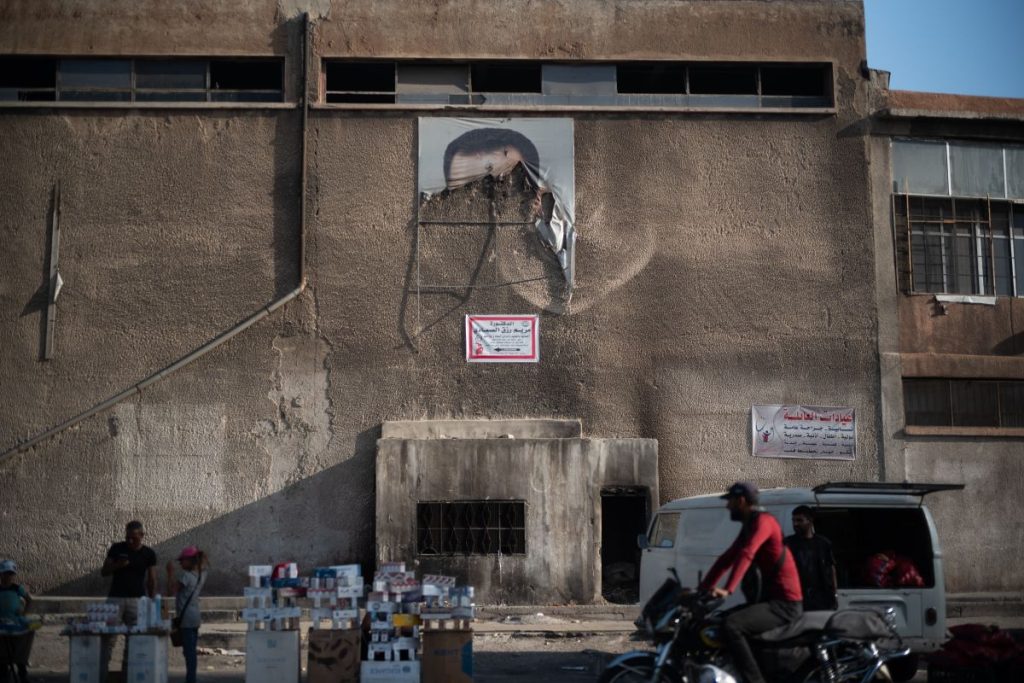
The portrait of Bashar Al-Assad burned on an official building of the former army of the overthrown regime at the entrance of Al-Tadamon, one of the martyr districts of the former regime’s blood-stained policy. Al-Tadamon, Damascus. Syria. 27 May 2025. © Audrey M-G./SpectoMédia.
On 8 December 2024, the fall of Bashar al Assad’s regime marked the end of more than thirteen years of devastating civil war. This turning point leaves Syria profoundly ravaged, with a torn society and still gaping wounds. The country now faces a monumental task, uncovering the truth, establishing justice, and reconciling a shaken population. But how can the extent of the crimes committed be assessed, trust restored between communities, and the social fabric rebuilt after years of extreme violence ? Transitional justice emerges as a possible answer. This framework encompasses various mechanisms, judicial, institutional, political, and symbolic, aimed at addressing massive human rights violations that occur during conflicts or under authoritarian regimes. Yet the Syrian case presents enormous challenges due to the unprecedented scale of the atrocities, the diversity of armed actors involved, and the complete collapse of the state apparatus.
From the very first days following the regime’s fall, several initiatives emerged from local communities in territories retaken by the opposition. Victims committees were established, testimonies began to be collected, and attempts were made to identify the mass graves recently uncovered. These efforts show that beyond the abstract notion of transition, the priority is to address concrete human tragedies, thousands of shattered lives seeking redress.
Any reflection on transitional justice in Syria can draw valuable lessons from similar experiences elsewhere. The 1994 Rwandan genocide led to the creation of hybrid tribunals and the community based Gacaca mechanisms [1], which tried hundreds of thousands of individuals while also sparking complex debates. In Bosnia, after the signing of the Dayton Accords, the International Criminal Tribunal for the former Yugoslavia prosecuted the main perpetrators of war crimes in a society still deeply divided [2]. In Argentina, the trials of military officials responsible for the dictatorship of the 1980s, followed by various memorial initiatives, demonstrated the importance of combining criminal justice with the preservation of collective memory. Syria appears destined to follow a similar path, in which reconciliation relies on a difficult but necessary pursuit of truth. These precedents raise a crucial question, which path should be taken to establish fair justice ? International justice through the International Criminal Court ? Specially constituted hybrid tribunals ? Local commissions focused on truth and reconciliation ? Or a combination of these approaches ?
Iyad Al Shaarani, a Syrian human rights lawyer met in Jaramana, on the outskirts of Damascus, stresses the importance of a legitimate process. According to him, avoiding the mistakes of the past is essential, Syria needs justice that is independent, transparent, and centered on the victims. Without that, we will only be paving the way for new violence. The task is monumental, but will it meet the expectations of a population burdened for far too long by impunity ?
Historical Context
In March 2011, carried by the wind of freedom of the Arab Spring that was blowing across the Arab world, Syrians took to the streets. Their demands were simple and universal, more democracy, more freedom, and the end of an authoritarian regime that had been suffocating them for decades. What was meant to be a peaceful movement tragically derailed.
Faced with the protesters, the regime of Bashar al Assad responded with violence. Brutal violence pushed the country into a downward spiral from which it has still not recovered. Gradually, the conflict became militarized. What began as a popular uprising turned into a civil war of staggering complexity. The Syrian regime was supported by Russia and Iran, while a mosaic of rebel groups emerged on the ground. The rise of Daesh [3] and al Nusra [4] further complicated the equation, followed by the involvement of the Syrian Democratic Forces [5]. Regional and international powers added their own interests to the picture, turning Syria into a geopolitical chessboard where battles were fought at the expense of civilians who paid the highest price.
The Syrian conflict will be remembered as one of the deadliest and most destructive of our time. Human rights violations and breaches of international law were systematic, massive, and committed by all sides without exception. What stands out is the scale and diversity of the atrocities, as if every limit of humanity had been crossed at once. International investigators, particularly those of the Independent International Commission of Inquiry on Syria, collected overwhelming evidence that documented the daily horror experienced by Syrians. Massacres followed one another, alternating between summary executions and large scale killings of civilians. Torture was institutionalized, particularly in government detention centers. The so called Caesar photos [6] revealed the scale of this organized barbarity, showing emaciated bodies tortured to death. Hundreds of thousands of people disappeared, leaving families without answers. Thousands of others were imprisoned without cause, victims of mass arbitrary arrests meant to terrorize the population [7]. Rape and sexual violence were used deliberately as weapons of war. Certain groups were persecuted for their political opinions, ethnic origin, or religious affiliation in a logic of systematic cleansing [8].
On the ground, all sides crossed red lines with disconcerting ease. Civilians suffered indiscriminate bombings of residential neighborhoods. Hospitals became targets. Schools were reduced to dust. Markets were regularly struck by indiscriminate attacks. Chemical weapons were used, including sarin and chlorine, breaking one of humanity’s fundamental taboos. The attack on Ghouta in August 2013 and that on Khan Sheikhoun in April 2017 remain among the most horrific examples [9]. Siege tactics were widely used, depriving entire cities of supplies. Starvation was used as a military weapon. Children were recruited as soldiers by various factions, depriving them of their innocence [10]. Systematic destruction, looting, and the erasure of cultural heritage plagued the country [11].
The numbers reveal the scale of the tragedy. Nearly seven million Syrians were displaced inside the country. More than six and a half million fled abroad. Entire neighborhoods were razed. Families were separated. A nation was uprooted.
International investigations confirm that the government of Bashar al Assad and its security services bear responsibility for the majority of documented atrocities. Systematic torture in detention centers, aerial bombardments of civilian areas, repeated use of chemical weapons, and deliberate starvation policies are among the most serious crimes committed [12]. Some opposition factions also committed abuses, including attacks on civilians, summary executions, hostage taking, and recruitment of children. Daesh and other jihadist groups added mass killings, sexual slavery, and destruction of heritage. Even the Syrian Democratic Forces face accusations, including arbitrary detentions, forced population displacements, and recruitment of child soldiers [13].
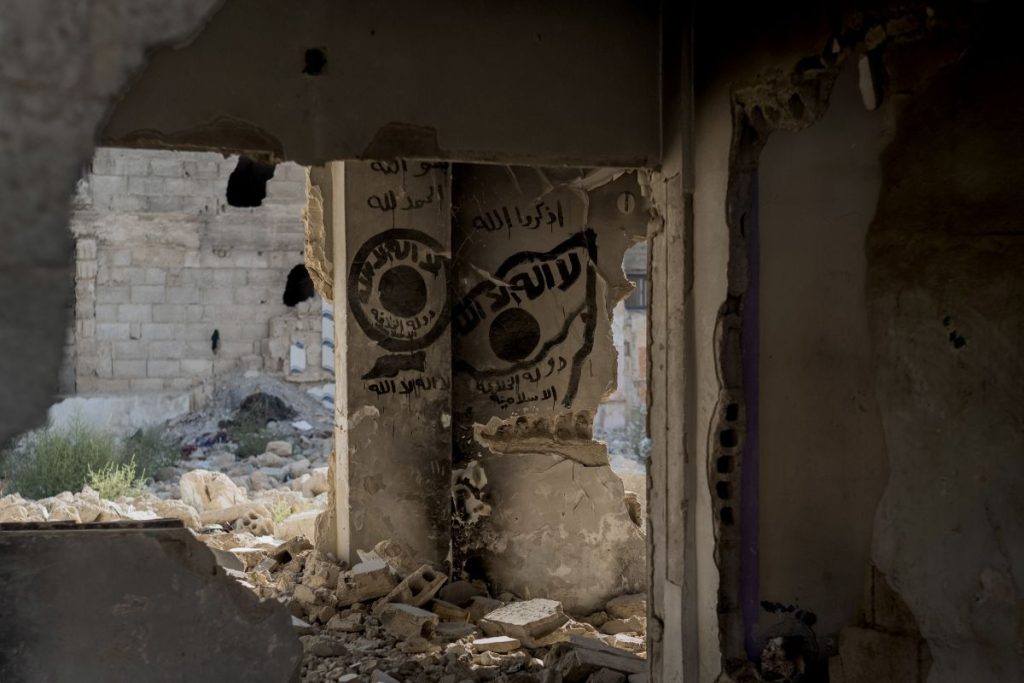
Trace of the passage of ISIS in the Al Tadamon district. In addition to the Shabiha gangs and the security forces, supported by the regular Syrian army, who committed daily massacres against the civilian population, ISIS also controlled part of the Al Tadamon district. The abuses committed by the Islamic State in Syria are considered war crimes and crimes against humanity.
Al Tadamon, Damascus, Syria, 25 September 2025. © Audrey M G, SpectoMedia.
Conceptual Framework of Transitional Justice and Lessons from Historical Experiences :
The concept of transitional justice emerged in the 1990s, a period marked by the fall of dictatorships and the end of civil wars in Latin America, Africa, and Eastern Europe. It refers to a set of mechanisms that enable a society to overcome a past of mass violence while establishing the foundations of a peaceful and democratic future. According to the United Nations High Commissioner for Human Rights, transitional justice rests on four pillars,
The right to the truth, documenting violations, identifying those responsible, and providing victims and society with a clear understanding of past events.
Justice, prosecuting the perpetrators of war crimes, crimes against humanity, and serious human rights violations.
Reparations, recognizing the suffering of victims through material, symbolic, or social measures.
Guarantees of non repetition, reforming institutions, particularly the army, police, and judiciary, to prevent a return to violence.
In practice, transitional justice can take various forms, international tribunals such as the International Criminal Tribunal for Rwanda ICTR [14], Truth and Reconciliation Commissions such as in South Africa [15], or national trials like those conducted in Argentina after the dictatorship [16]. Scholar Ruti Teitel, known for her major contribution to the development of this concept, offers a concise synthesis, “Transitional justice is not a recipe, but a framework. It forces societies to face their past while laying the conditions for their democratic future.”
In Syria, this definition takes on a deeply crucial dimension. Thirteen years of war have left a tragic legacy, mass graves, disappeared detainees, devastated cities, and millions of refugees scattered across the region and beyond. Anwar al Bunni, a Syrian lawyer and human rights advocate who documented regime crimes, stresses the essential stakes, without truth, trust will remain out of reach, without justice, peace will never be possible. Iyad Al Shaarani, active in Damascus within groups supporting victims, recalls that transitional justice is not an imported concept but an unavoidable necessity. According to him, denying families of the disappeared access to truth and justice would condemn Syria to remain trapped in its trauma, “Transitional justice is not an idea imported from outside. It is a necessity. If we do not give families of the disappeared the right to truth and justice, then Syria will remain a prisoner of its wounds.”
Contemporary history provides numerous examples that illuminate the reflection on transitional justice in Syria, a country scarred by a long lasting dictatorship and by a conflict that has lasted for more than a decade. Each experience, with its successes and failures, sheds light on the complex path that remains toward a just and lasting reconciliation.
In 1945, in the aftermath of the Second World War, the International Military Tribunal at Nuremberg marked the emergence of a framework for international criminal justice [17]. For the first time in history, leaders of a defeated state were prosecuted and judged for war crimes, crimes against peace, and crimes against humanity. Although this precedent has been criticized as victor’s justice, it remains a fundamental milestone in international criminal law. According to a former judge of the tribunal cited by the United Nations, the trial represented more than a condemnation, it carried the message that heads of state could not act with impunity. Philippe Sands, legal historian, notes that “Nuremberg showed that no leader could stand above the law.” This principle still resonates in the Syrian context.
Nearly fifty years later, in 1994, the genocide of the Tutsis in Rwanda brutally exposed the failures of the international community. In the span of one hundred days, nearly 800000 lives were lost. Confronted with its own impotence, the Security Council created the ICTR in Arusha [18]. This tribunal brought many Rwandan officials to justice, but it was also criticized for its slow pace and its distance from victims. Faced with these limits, Rwanda complemented the international approach with the local Gacaca courts, based on community practices. Carla Del Ponte, former ICTR prosecutor, recalls that “the ICTR judged 61 people in twenty years, but it opened a breach, that of the inevitability of international justice.” In Bosnia, the trials related to Srebrenica and the convictions of Ratko Mladić and Radovan Karadžić [19] illustrate the need to prosecute the highest level perpetrators to end impunity and to establish local mechanisms in direct contact with victims. The Mothers of Srebrenica [20] expressed their pain and their expectations for justice, “Protecting civilians cannot be limited to peacekeepers watching on. Institutions capable of prosecuting are necessary, otherwise massacres repeat themselves.” Several lessons emerge, prosecute top level perpetrators, combine national and local mechanisms, and connect memory, reconciliation, and justice in societies marked by conflict. “Syria stands at a crossroads, repeating Bosnia’s mistakes or inventing a hybrid model that reflects its own history,” says Kathryn Sikkink, professor of human rights at Harvard. Former Rwandan ambassador to the United Nations, Joseph Nsengimana, reminds us, “Truth frees expression and restores part of the dignity of victims.”
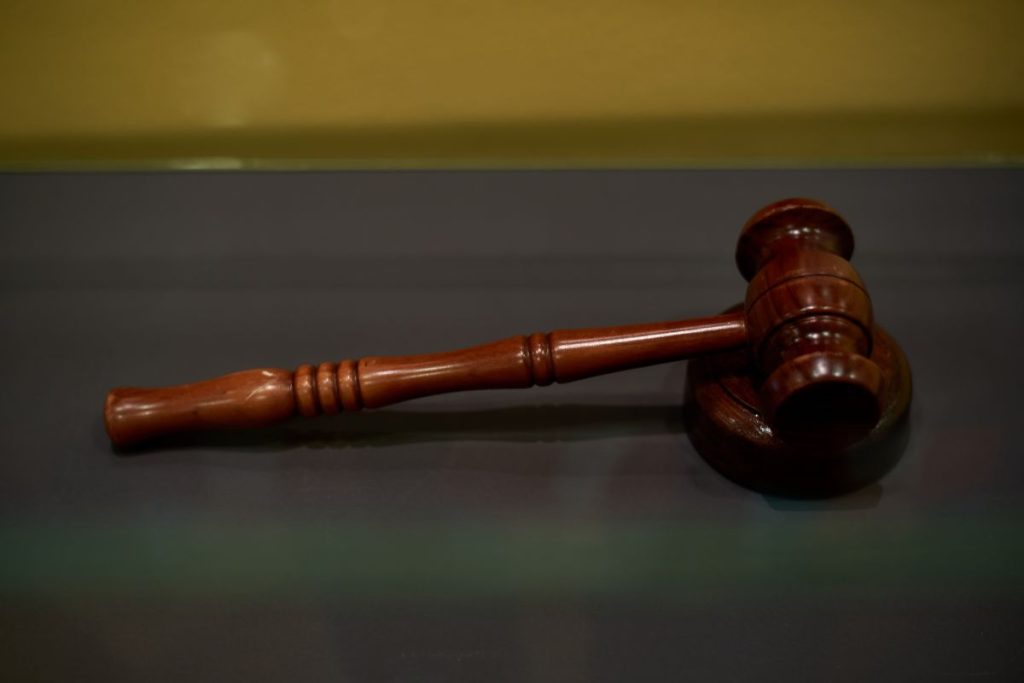
More than twenty years after the massacre of nearly 8000 Muslim men and boys in Srebrenica in July 1995, Radovan Karadžić, former political leader of the Bosnian Serbs and former president of the Republic of Srpska, was sentenced to forty years in prison. The gavel used to pronounce the verdict for genocide, crimes against humanity, and war crimes is displayed at Sarajevo City Hall.
Sarajevo, Bosnia and Herzegovina, 11 July 2025. © Audrey M G, SpectoMedia.
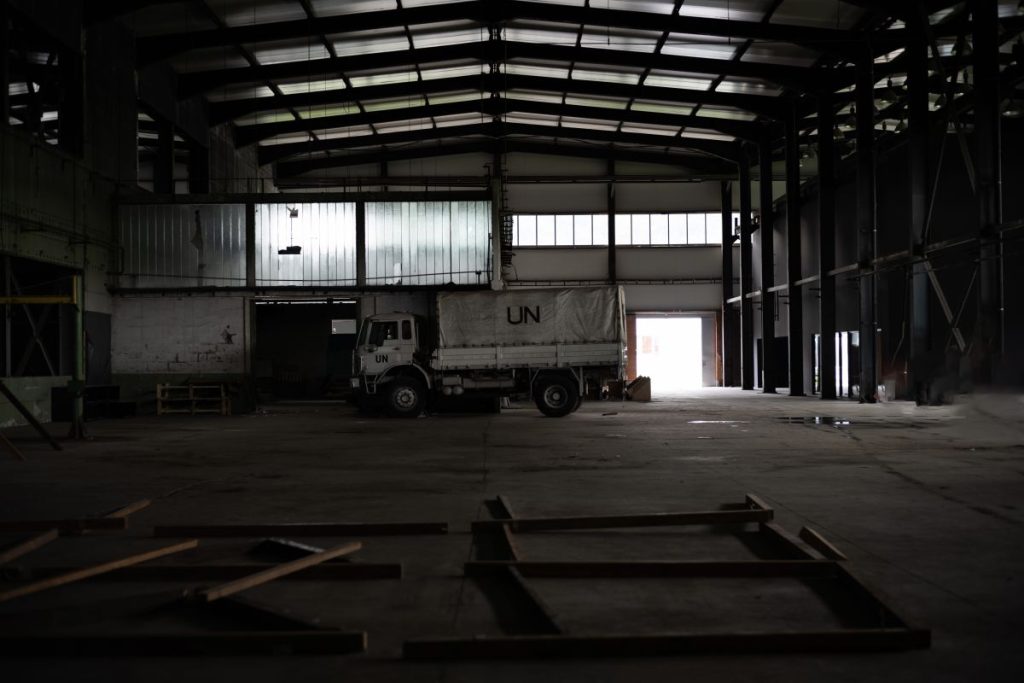
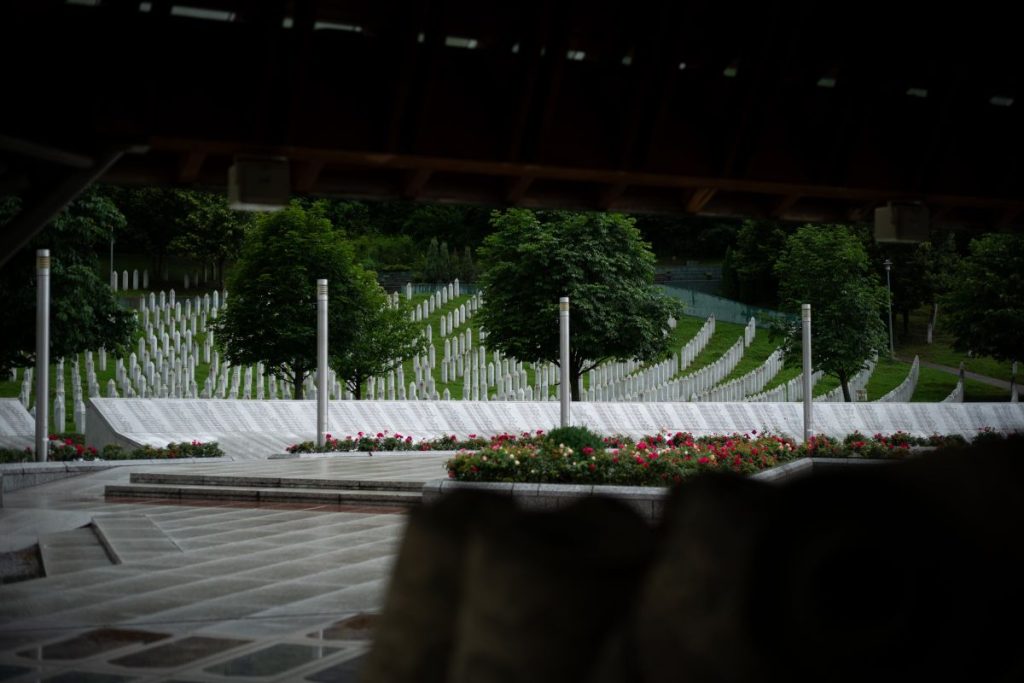
The Dutch UN base in Potočari, a town declared a security zone by the United Nations, hosted 400 Dutch peacekeepers who, at the time of the massacre, did not protect the civilians in this zone and allowed the separation of men and women, after which the men were executed and the women expelled under the orders of General Ratko Mladić. On the Srebrenica genocide memorial, one can read “8372… the number is not final” because new human remains are discovered every year. Srebrenica, Bosnia and Herzegovina, 13 June 2024. © Audrey M G, SpectoMedia.
For Syria, the tension between the need for international justice and the importance of local justice remains central. Reed Brody, a lawyer specializing in mass atrocities, notes, “For Syria, the question will be the same as in Rwanda, how can international justice and local justice be articulated ?” How can international mechanisms capable of ensuring global legal traceability be reconciled with local approaches that include the communities directly affected by the atrocities ? However, experiences in Argentina and Chile also show the power of documented truth as a foundation for reconstruction. The Nunca Más report 1984 remains a global reference [21], documenting enforced disappearances and establishing a collective memory. In Chile, the Rettig Commission 1991 helped break the wall of impunity [22]. These experiences show the crucial role of civil society, when the state falters, it is families, associations, and survivors who push justice forward. In Argentina, the Mothers of the Plaza de Mayo [23] transformed their pain into a movement and forced the country to confront its past. The Truth and Reconciliation Commission in South Africa [24] placed the public testimony of victims at the center of the path toward healing, demonstrating that the voice of victims is not an addition, but the very condition of reconciliation. Lebanon remains the counter example of the general amnesty that should not be followed. After the civil war 1975 to 1990, the Taif Agreement [25] established a general amnesty covering war crimes. Thirty years later, the consequences are disastrous, heightened sectarianism, widespread corruption, and a society unable to confront its past. The absence of justice brings not peace, but chronic instability.
The Applicable Mechanisms of Transitional Justice.
Transitional justice for Syria relies on a holistic approach [26] that combines judicial and non judicial mechanisms in order to address serious crimes while preparing society for a lasting peace. On the judicial level, several options exist, each presenting its advantages, its limits, and its conditions for implementation.
The first option is based on universal jurisdiction. This path would allow national courts to investigate and prosecute serious international crimes regardless of where they were committed or of the nationality of the perpetrators and victims. In Europe, it has resulted in major trials, in Germany, cases such as Iyad al Gharib, convicted in 2021, and Anwar Raslan, sentenced to life imprisonment in 2022, for crimes against humanity, in France, investigations opened targeting high ranking officials of the regime [27], in Sweden, convictions for war crimes, and ongoing proceedings in the Netherlands and Austria [28]. However, this approach remains limited by the small number of cases processed, the requirement for suspects to be physically present before the courts, high costs, and difficulties in accessing witnesses and evidence. Nevertheless, it remains an important guide, especially when other mechanisms face political or legal obstacles.
The second option is the International Criminal Court ICC [29]. Syria has not ratified the Rome Statute [30], which mechanically restricts the ICC’s jurisdiction. The Court could intervene if Syria accepted its jurisdiction, an unlikely scenario, or if the UN Security Council [31] referred the situation to the Court, a mechanism frequently blocked by the vetoes of Russia and China. Attempts to refer the case, notably in May 2014, were blocked by these vetoes. An alternative path would be for the ICC to examine certain crimes committed by Syrian nationals on the territory of States Parties, such as Jordan. This remains limited but illustrates a possible extension of international criminal action when international law and the enforcement of individual responsibility converge.
The third option is the creation of a Special International Criminal Tribunal ad hoc [32], inspired by the tribunals for the former Yugoslavia or Rwanda. Its establishment would require a Security Council resolution, significant international funding, and a clear mandate with adequate resources. Its benefits would be real, international legitimacy, specialized expertise, and the capacity to handle numerous cases, with a powerful symbolic impact in condemning serious crimes. But political and financial obstacles remain, along with the long duration and complexity of such proceedings.
Finally, the fourth option lies in a hybrid tribunal [33], combining international and national judges and blending international and domestic law. This model has been tested with varied results in similar contexts, the Special Court for Sierra Leone, the Extraordinary Chambers in the Courts of Cambodia, and the Special Tribunal for Lebanon. For Syria, possibilities could include an agreement between the UN and a future Syrian government, the establishment of such a court in a third country, or the involvement of Arab judges to strengthen regional legitimacy and local understanding. The challenge lies in coordinating different legal systems and securing the political consent of regional actors.
Scholar Ruti Teitel, recognized for her major contribution to the reflection on this concept, offers a clear synthesis, “Transitional justice is not a recipe, but a framework. It forces societies to face their past while laying the conditions for their democratic future.”
Beyond purely judicial mechanisms, non judicial mechanisms play a crucial role in building a collective memory, repairing victims, and reforming institutions to prevent future abuses. Truth and reconciliation commissions could establish a factual historical narrative of the conflict, give victims a voice, identify structural causes, and formulate concrete recommendations for reconciliation. To be effective, they require independence and impartiality, inclusive participation of all communities, a clear mandate and timeframe, adequate resources, and above all, robust witness protection mechanisms. In Syria, the challenges would be considerable due to social polarization, mistrust toward institutions, and security issues, making close coordination with judicial procedures and strong witness protection essential in a potentially volatile context.
Reparation programs offer another tangible way to address harms suffered and restore individual and collective dignity. They can take material, symbolic, and rehabilitative forms. Material reparations include financial compensation for losses, restitution of property, medical and psychological assistance, and scholarships for the children of victims. Symbolic reparations include the establishment of memorials and monuments, the creation of commemorative days, and official public apologies accompanied by public recognition of the suffering endured. Rehabilitation programs involve health care, social services, and support for reintegration of affected individuals. Practical challenges remain significant, limited financial resources, the identification and registration of victims, fairness in distribution, and the need to prevent the emergence of new social divisions.
Security sector reform is essential to prevent future violations and restore trust in the state. Its priority goals include dismantling structures responsible for abuses, personnel screening vetting [34], training in human rights, establishing mechanisms for civilian oversight, and ensuring transparency and accountability. This includes the armed forces, intelligence services, police, and the judicial and prison systems. Finally, any institutional and political reform must rely on a new constitution that guarantees fundamental rights, the establishment of an independent judiciary, administrative decentralization, protection of minorities, and mechanisms for citizen participation in order to anchor democracy in a sustainable way.
For transitional justice to be truly effective in Syria, it must be approached in an integrated and gradual manner, criminal justice alone cannot suffice. It must be accompanied by truth mechanisms to illuminate the past, reparation processes to heal the harm, and structural reforms to transform institutions and practices. This holistic approach, combining accountability, reparation, and reform, is essential to build a just and lasting peace, preserve the dignity of victims, and offer all Syrians a safer and more humane future. Thirteen years of war have left a tragic mark, mass graves, disappeared detainees, devastated cities, and millions of refugees scattered across the region and beyond. Anwar al Bunni stresses the essential stakes, without truth, trust will remain out of reach, without justice, peace will never be possible. Iyad Al Shaarani recalls that transitional justice is not an imported concept but an unavoidable necessity. According to him, denying families of the disappeared access to truth and justice would condemn Syria to remain trapped in its trauma, “Transitional justice is not an idea imported from outside. It is a necessity. If we do not give families of the disappeared the right to truth and justice, then Syria will remain a prisoner of its wounds.”
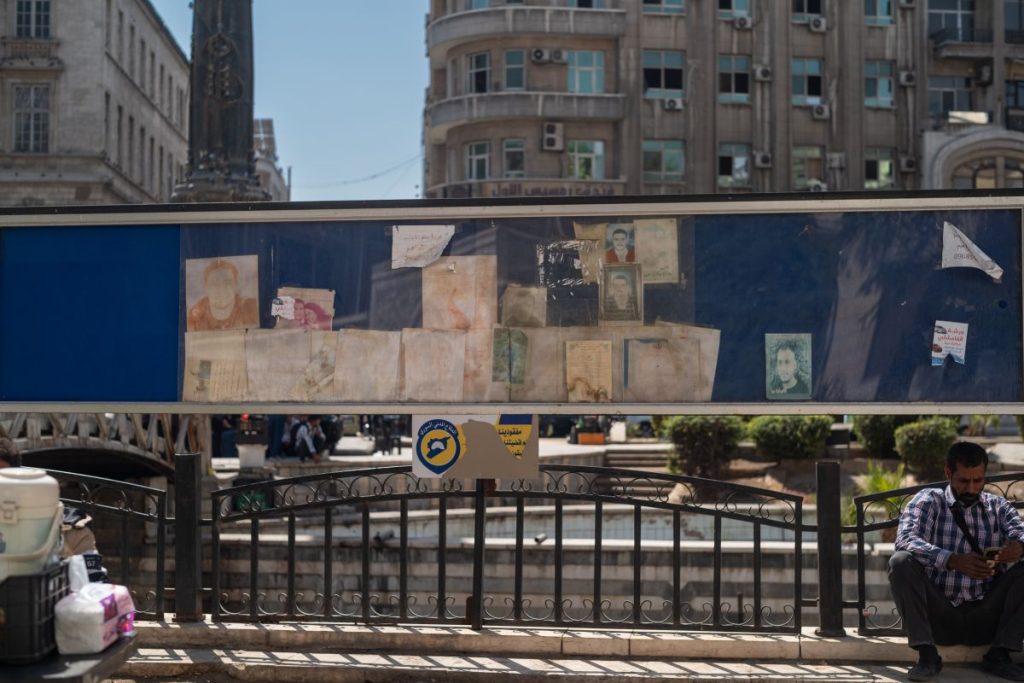
Wall of the Disappeared. Portraits of missing persons are displayed throughout Damascus. Here, at Al Marjeh Square, the photos fade in the sun as families wait tirelessly for the slightest sign of an answer to their hopes. Damascus, Damascus, Syria, 13 October 2025. © Audrey M G, SpectoMedia.
ANNEXES
[1]
Hybrid tribunals, these are judicial systems that combine elements of customary or traditional law with procedures and safeguards of modern state law. The objective is to adapt the judicial process to local realities while ensuring minimum standards of law, fairness, and remedy. In a post conflict context, hybrid tribunals may include judges appointed by the state and by the community, mixed procedural rules, and jurisdiction to try serious crimes or conflict related offenses while preserving the rights of defendants, victims, and witnesses.
Community based Gacaca mechanisms, the Gacaca were community tribunals established in Rwanda after the 1994 genocide to accelerate judicial procedures, resolve disputes, and facilitate reconciliation. Operating at the level of local communities, they addressed acts linked to the genocide, such as offenses against persons and property, and placed emphasis on truth, reparability of harm, and community reintegration. The Gacaca mechanisms combined elements of local justice, accountability, and more informal procedures, such as public hearings and community testimony, while being supervised by national judicial authorities and grounded in national law.**
[2]
International Criminal Tribunal for the former Yugoslavia ICTY, ad hoc international criminal court created by the UN in 1993 to prosecute the most serious crimes committed in the former Yugoslavia from 1991 onward, including genocide, crimes against humanity, war crimes, and to some extent crimes of aggression, aiming at individual responsibility and the development of international criminal law.
[3]
Daesh, acronym of the Arabic الدولة الإسلامية في العراق والشام Al Dawla al Islāmiyya fī l Iraq wa Sham, also called Islamic State IS, is a Sunni jihadist group that proclaims itself a state and seeks to establish a radical Islamist governance. It emerged in the 2000s in Iraq, expanded under ISIL Daesh after 2013 to 2014, and led a violent campaign of territorial conquest, purges, and atrocities while conducting international terrorist acts. The group lost most of its territory in the mid 2010s but remains active in insurgent and clandestine forms and is designated as a terrorist organization by many states and international institutions.
[4]
Al Nusra, full name Jabhat al Nusra formerly Jabhat al Nusra, also called the al Nusra Front, is a Sunni jihadist Syrian group founded in 2011 to 2012 as a branch of Al Qaeda operating in Syria. Its declared objective is to establish an Islamist regime following a salafist interpretation. It carried out military operations against the Syrian government and engaged in actions against rival groups and civilians. It is designated as a terrorist organization by numerous states and international bodies. In 2015 to 2016, it announced a certain affiliation with the Islamic State, then changed its name and alliances. It is widely recognized as a key actor in the Syrian jihadist landscape.
[5]
Syrian Democratic Forces SDF, a multi ethnic and multi confessional Syrian military alliance dominated by the Kurdish YPG YPJ, created around 2015 in the context of the fight against the Islamic State. It brings together Kurdish, Arab, Assyrian, and other local groups and is supported by the international coalition led by the United States. Its main objective is to defend northern and eastern Syria and establish local autonomy while combating jihadist extremism.
[6]
The term Caesar Files refers to thousands of photographs and documents released by an anonymous source demonstrating torture and crimes committed by Syrian authorities during the conflict. The name Caesar comes from the alias used by the whistleblower who brought these materials, which show detainees tortured and killed. These files have been used by NGOs, investigative reports, and international judicial procedures to document abuses, establish facts, and support prosecutions or political resolutions.
[7]
Cf, https, spectomedia.org, 2025, 02, 28, de palmyre a saydnaya un enfer nomme al assad
[8]
The Syrian regime is accused of targeting various groups based on religion, ethnicity, political affiliation, or social status, with acts such as detention, torture, execution, and deportation. Groups targeted include Sunnis and Alawites perceived as opponents, Druze and Christian minorities, Kurds and Assyrians Chaldeans, as well as political opponents, human rights activists, journalists, and local elites seen as sympathetic to the opposition. The description varies depending on the regional and temporal context.
[9]
Chemical weapons, chemical substances used as weapons to cause death, severe injury, or illness through inhalation, contact, or ingestion. They are classified according to their effects, such as toxic gases or nerve agents, and are prohibited under international law.
Sarin gas and chlorine, sarin is an extremely toxic organophosphorus nerve agent that acts on the central and peripheral nervous system. Chlorine is a simple irritant gas used as a chemical weapon that causes respiratory damage and burns. Possession and use are prohibited by international conventions.**
[10]
HRW Human Rights Watch
Under Assad’s Sky, The Use of Child Soldiers by Pro Government Militias in Syria, HRW, 2015
Syria, Children in Harm’s Way, HRW, 2013 to 2015
No One to Trust, Child Recruitment by Pro Government Militias in Syria, HRW, 2013
Various HRW thematic reports on war crimes in Syria, 2012 to 2020
Amnesty International
Syria, The Hidden Scars of Child Recruitment by Pro Government Forces, AI, 2014
Living in Fear, Children in Syria and the Use of Child Soldiers by Pro Government Groups, AI, 2016
Rights of the Child in Syria, Conflicts and Forced Recruitment, AI, 2012 to 2018
Complementary reports
ACLED and other conflict databases, 2012 to 2024**
[11]
During the civil war, coordinated and systematic acts targeted archaeological sites, monuments, and artworks, causing irreversible destruction of cultural heritage. Armed groups, including factions affiliated with or supported by the regime, looted, sold, or destroyed sites for financial or ideological reasons. Damages included demolition, explosives, vandalism, and theft of cultural objects.
UNESCO
The Destruction of Syria’s Cultural Heritage
Syria, Destruction of Cultural Heritage in Syria
World Heritage Convention and safeguarding frameworks
HRW
The Destruction of Cultural Heritage in Syria, 2014 onward
Attacks on cultural heritage in Syria, 2013 to 2020**
[12]
Deliberate siege and starvation, military practice aimed at subduing a civilian population by intentionally depriving it of food and vital supplies. Under international law, these acts may constitute war crimes under the Geneva Conventions and Protocol I, which prohibit deliberate attacks on civilians and obstruction of humanitarian aid. Depending on scale and intent, they may also be classified as crimes against humanity when systematic attacks target specific populations. ICC and ICTY jurisprudence has confirmed that intentional starvation and targeted blocking of humanitarian relief can constitute war crimes or crimes against humanity.
[13]
HRW
ISIS Daesh Child Soldiers, 2014 to 2015
Children’s Rights in Syria, Abuses by Kurdish Led Forces, 2017
Amnesty International
ISIS, Child Soldiers, 2014
Syria, Children in the Crossfire, 2015**
[14]
International Criminal Tribunal for Rwanda ICTR, created by the United Nations in 1994 to prosecute those responsible for crimes committed in 1994, including genocide, crimes against humanity, and war crimes. It operated until 2015 to 2016 and delivered landmark judgments shaping international criminal law.
[15]
Truth and Reconciliation Commissions TRCs such as in South Africa, mechanisms created after conflicts or authoritarian regimes to establish past violations, acknowledge victims, reveal facts, provide rehabilitation programs, and foster reconciliation. They promote historical truth, accountability, and reparative measures without necessarily imposing criminal sanctions.
[16]
Post dictatorship national trials, judicial procedures carried out by a state to establish responsibility for crimes committed under a dictatorship, including crimes against humanity, genocide, war crimes, unlawful detention, and torture. They aim to establish facts, deliver sentences or reparations, and contribute to transitional justice and reconciliation.
[17]
International Military Tribunal at Nuremberg, created in 1945 to prosecute Nazi leaders for genocide, crimes against humanity, and crimes against peace. It laid the foundations of modern international criminal justice and the principle of individual responsibility of state leaders.
[18]
International Criminal Tribunal for Rwanda ICTR, established in 1994 in Arusha Tanzania to prosecute those responsible for the 1994 genocide. It delivered historic rulings on genocide, crimes against humanity, and war crimes, contributing to international humanitarian law.
[19]
Convictions of Ratko Mladić and Radovan Karadžić, judgments issued by the ICTY in 2010 Mladić and 2011 Karadžić, convicting them of genocide, crimes against humanity, and war crimes related to the siege of Sarajevo and the Srebrenica massacre. These rulings highlight individual responsibility and strengthen international criminal law.
[20]
The Mothers of Srebrenica, a group of Bosnian women who lost relatives in the 1995 Srebrenica massacre and mobilized for truth, justice, and commemoration. They play a crucial role in advocacy, research on victims, and demands for official recognition of the crimes.
[21]
Nunca Más, official reports published after periods of repression in Latin America, especially in Argentina 1983, documenting human rights violations, identifying perpetrators, and proposing reparations and reforms. The report became a cornerstone for transitional justice and collective memory.
[22]
Rettig Commission, national commission established in Chile in 1991 to investigate human rights violations committed during the dictatorship 1973 to 1990. Its report documented executions, disappearances, and torture and proposed reforms and reparations. It is a key component of Chile’s democratic transition.
[23]
Mothers of the Plaza de Mayo, Argentine women founded in 1977 who organized public demonstrations to demand truth and justice for disappeared relatives during the dictatorship 1976 to 1983. They continue to advocate for memory, human rights, and institutional reforms.
[24]
South African Truth and Reconciliation Commission, established after apartheid 1996 to 1998 to document abuses, hear victims and perpetrators, recommend reparations, and support democratic transition. It emphasized truth, accountability, and structural reform.
[25]
Taif Agreement, 1989 peace agreement that ended the Lebanese civil war, reorganized political power sharing among sectarian communities, and provided frameworks for stabilization, demilitarization, and gradual political transition.
[26]
Holistic approach to transitional justice, integrated framework combining truth, criminal justice, reparation, reconciliation, and institutional reform to address root causes of conflict. It coordinates commissions, reparations, judicial reforms, security sector reforms, and social reintegration to meet victims’ needs and prevent recurrence.
[27]
Iyad al Gharib and Anwar Raslan, two Syrian former officials prosecuted for crimes committed during the conflict. Iyad al Gharib was convicted in 2021 for crimes against humanity. Anwar Raslan was sentenced to life imprisonment in 2022 for crimes against humanity, torture, and extrajudicial executions. Their cases illustrate international and national efforts to prosecute grave human rights violations.
[28]
In Sweden, war crimes convictions have been issued under universal jurisdiction. In the Netherlands and Austria, ongoing proceedings target former Syrian officials. These actions reflect an approach that seeks accountability for serious crimes regardless of where they occurred.
[29]
International Criminal Court ICC, permanent court created in 2002 to prosecute individuals accused of genocide, crimes against humanity, war crimes, and, in some cases, aggression, when national courts cannot or will not prosecute.
[30]
Rome Statute, founding treaty of the International Criminal Court defining the crimes under its jurisdiction, its procedures, and its authority since 2002.
[31]
UN Security Council, main UN body responsible for maintaining international peace and security. It adopts binding resolutions, authorizes use of force or sanctions, and oversees peacekeeping missions.
[32]
Special International Criminal Tribunal ad hoc, court created for a specific conflict or period to prosecute grave crimes. Examples include the ICTY and ICTR.
[33]
Hybrid tribunal, judicial mechanism combining national and international law and judges to prosecute serious crimes in post conflict settings.
[34]
Personnel vetting, thorough assessment process to verify integrity, reliability, background, and potential risks before entrusting individuals with sensitive positions, especially in security or public institutions.